Israeli Military Officer Warns of Gaps in Gaza Monitoring as Hamas Strengthens
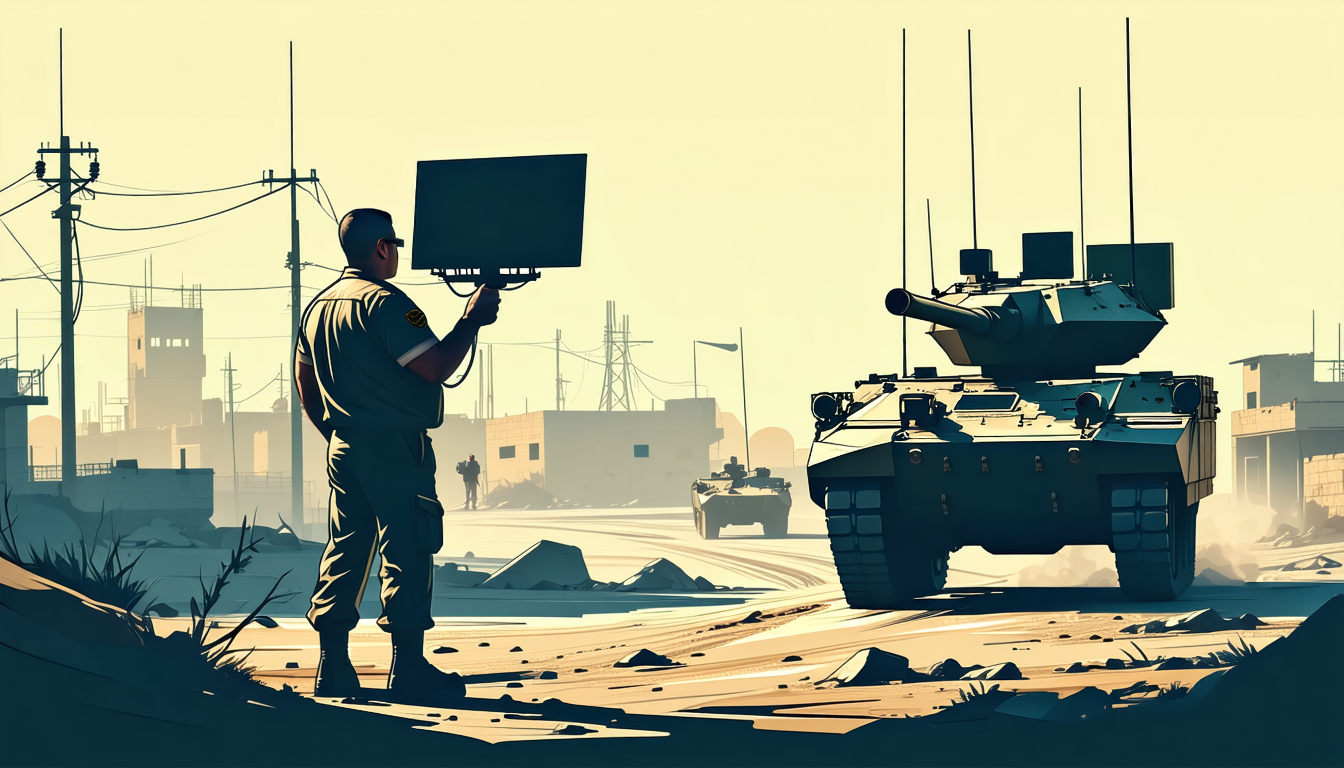
An Israeli reserve officer has raised concerns about the military's capacity to track supplies and equipment flowing into Gaza, even as Hamas maintains control over the territory and expands its operational capabilities.
Reserve Colonel Hazi Nahmah, speaking on 103FM radio in a discussion with Ron Kaufman and Professor Aryeh Eldad, articulated a sobering assessment of the current situation. He stated plainly that Israel cannot operate with unrestricted freedom in the Gaza Strip at this juncture, while Hamas continues to entrench itself organizationally and militarily.
"None of the goals of the war have been fully achieved," Nahmah said, acknowledging what he characterized as notable accomplishments across multiple fronts while expressing frustration with the overall trajectory. "In the Gaza Strip, Hamas is still in power."
The central challenge, according to Nahmah, stems from Hamas's continued control of Gaza's borders and entry points. He specifically cited the infiltration of advanced weaponry into the enclave, noting that "in the last two months, dozens of drones that can carry up to 150 kg have entered the Gaza Strip."
More troublingly, Nahmah highlighted a fundamental intelligence gap: "We have no ability to know what is entering. We only have the ability to estimate what Hamas wants to enter."
Regarding potential negotiations with Hamas, Nahmah expressed skepticism about meaningful concessions. He suggested that any Hamas agreement would likely consist of symbolic gestures rather than substantive compromises, as the organization has not abandoned its aspirations to function as an armed movement.
Nahmah advocated for what he termed "the generals' plan"—a comprehensive approach he contended would break Hamas's resolve. While he did not elaborate extensively on its specifics, he alluded to population displacement and infrastructure restrictions as key components. "Moving the population in the Gaza Strip and closing the water pipeline. I believe that this is the matter that will lead to Hamas's victory," he said, though he clarified his opposition to deliberately creating humanitarian deprivation. "I do not want to make the population thirsty. I will give food and water in the area I choose. In the area where there is only Hamas, close the water pipe."
Nahmah emphasized that diplomatic rhetoric alone cannot resolve the conflict. "With words you cannot reach a solution, with actions you can," he stated.
Beyond Gaza, Nahmah assessed the broader security posture of the Israeli military following the ceasefire agreement with Lebanon. He characterized the armed forces' current operational status as "neither normal nor healthy," describing it as an awkward hybrid state—neither fully mobilized for offense nor maintaining defensive readiness, particularly given ongoing negotiations involving Iran.
However, Nahmah identified one positive development in the Lebanese arrangement: the establishment of a security zone where Israeli forces operate without restriction. He framed this as a genuine achievement, particularly if the agreement's sustainability depends on Hezbollah's disarmament.
Nahmah's remarks reflect growing anxiety within segments of the Israeli defense establishment regarding Gaza's trajectory toward prolonged attrition, with mounting questions about the military's capacity to achieve its objectives and diminishing clarity about conditions within the territory itself.
Compare options


