Scientists Propose "Stormwall" Space Shield to Defend Earth from Solar Storms
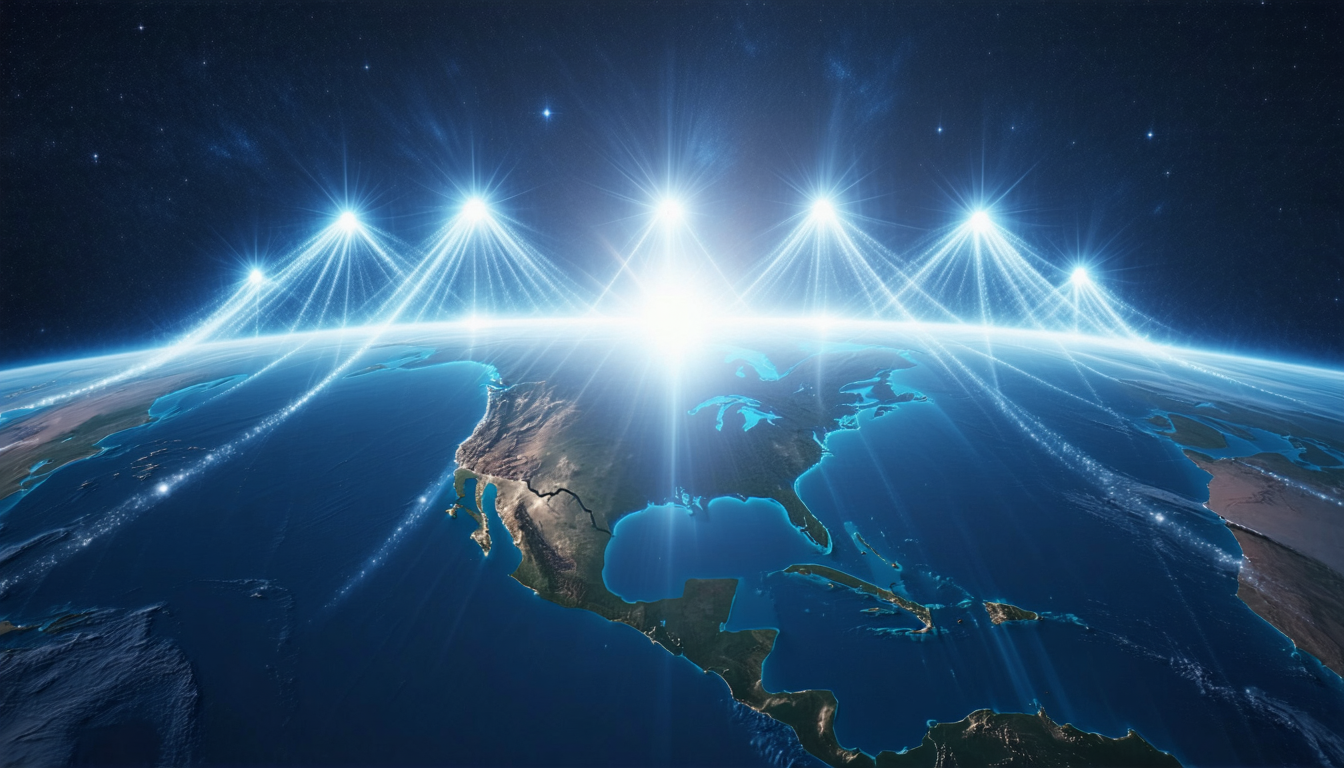
Scientists have proposed an ambitious defense system against the sun's most destructive forces: a constellation of satellites designed to create a protective barrier around Earth.
The concept, detailed in a study published in the Space Weather journal, has drawn interest from experts who view it as "highly feasible." Researchers have named the initiative "Stormwall" and say it represents a proactive approach to managing the growing threat posed by intense solar activity.
As the sun approaches the peak of its 11-year activity cycle in recent years, Earth has encountered numerous solar storms. These events originate from coronal mass ejections—massive bursts of plasma expelled during violent solar surface explosions—which produce phenomena like the aurora borealis visible from high latitudes.
The danger lies in the potential for extreme events. A superstorm comparable to the Carrington event of 1859 could be hundreds of times more powerful than typical solar storms. If such an event occurred today, it would severely damage the satellite networks and ground infrastructure that underpin modern civilization worldwide.
The proposed Stormwall system would deploy six bus-sized satellites into geosynchronous orbit at an altitude of 36,000 kilometers—far above the International Space Station and most operational satellites. Once positioned, these satellites would remain dormant until monitoring systems detect an imminent major solar storm. Upon alert, the constellation would release clouds of reactive gases—barium, lithium, or sodium—along Earth's magnetosphere boundary. These materials would form an expansive plasma wall functioning as a cushion, diminishing the force of incoming coronal mass ejections and altering their trajectory away from the planet.
Computer modeling conducted by the research team indicates the plasma barrier could suppress a superstorm's intensity by more than 50 percent. The simulations further suggest that had such a system been operational during May 2024's solar storm event, it could have reduced the resulting geomagnetic disturbance by as much as 84 percent.
The inspiration for this technology stems from examining nature's own defenses. During solar storms, Earth's magnetic field temporarily loses strength, yet oxygen ions naturally accumulate in the magnetosphere on the sun-facing side, creating a protective bubble that shields the planet from radiation.
Compare options


