The Strike That Changed Iran's Leadership and Altered the Middle East
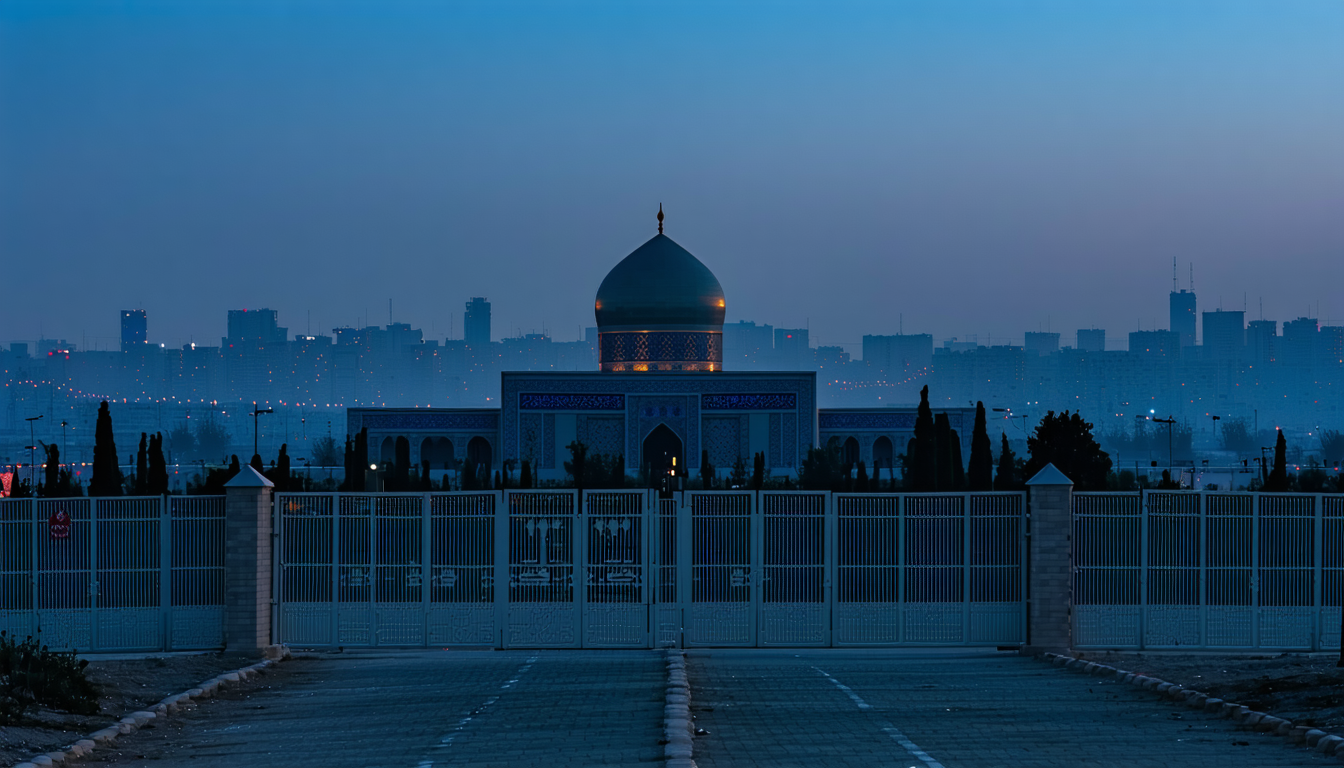
As Tehran residents began their Saturday work week on February 28, the capital was preparing for Persian New Year and Ramadan festivities amid ongoing diplomatic tensions between Iran and the United States and Israel. The city remained under heightened security following January protests that authorities said left thousands dead—with Western estimates placing casualties at 20,000 on January 8 and 9, while Iranian officials cited a figure of 2,000.
Activity intensified around the fortified compound in central Tehran housing the Supreme Leader's residence and administrative offices. That afternoon, multiple explosions erupted near the Pasteur Complex, a key leadership center, with smoke visibly rising from the area.
Israel's Defense Ministry quickly announced it had conducted "pre-emptive strikes against Iran." For hours, uncertainty surrounded the fate of 86-year-old Ayatollah Ali Khamenei, who had led the nation for nearly four decades through continuous confrontation with Washington while suppressing domestic dissent.
US President Donald Trump declared on Truth Social that evening: "Khamenei, one of the most evil people in history, has died," adding that the Iranian leader "was not able to avoid the highly sophisticated intelligence agencies and tracking systems we have."
Iranian authorities initially maintained that Khamenei had survived the attack. However, on the morning of March 1, a state television announcer with an emotionally strained voice confirmed the Supreme Leader's death.
The government subsequently acknowledged the deaths of several senior military and security officials in the strike: Chief of Staff Abdul Rahim Mousavi, Defense Minister Aziz Nasir Zadeh, War Council head Ali Shamkhani, and Revolutionary Guard commander Muhammad Pakpour.
According to reporting by the New York Times, the CIA had monitored Khamenei for months and learned of a scheduled high-level security meeting at the Pasteur complex on that Saturday morning. This intelligence reached Israel, and approximately two hours and five minutes after Israeli aircraft departed, long-range missiles struck the compound at roughly 9:40 a.m. Tehran time—notably outside the typical window for such operations.
Trump elaborated on the timing during a subsequent G7 summit in France: "They thought we would not reach them, because we never bomb during breakfast, but we bombed."
Beyond the Supreme Leader and the four top officials, the strike claimed additional prominent figures. Khamenei's family members also perished in the attack, including his daughter, daughter-in-law, son-in-law, and granddaughter. His son Mojtaba Khamenei, who held no official title but served as a central figure in his father's office, survived with injuries after losing his wife, Zahraa Haddad Adel, according to Iranian officials.
A week following the strike, Mojtaba Khamenei was elected as Iran's third Supreme Leader. He has remained out of public view since assuming the position.
The elder Khamenei had maintained extraordinary security protocols throughout his tenure. He never traveled outside Iran while serving as Supreme Leader, rarely broadcast speeches live, and seldom announced appearances in advance. During Israel's 12-day military campaign against Iran in June 2025, reports indicated he sheltered in a secure location.
Yet in a striking departure from typical security practice, Khamenei appeared publicly in Tehran on February 17—just days before the fatal strike. He delivered what would be his final speech at his office's Husseiniya, receiving officials and dignitaries from East Azerbaijan Province, particularly from Tabriz in the country's northwest, during a customary annual gathering.
In that address, Khamenei warned that the United States sought to "swallow" Iran and called on citizens to remain composed and continue their daily routines "without any worries."
Agence France-Presse noted that Khamenei's presence in central Tehran on February 28, rather than at an undisclosed location as some reports had suggested, surprised many observers given the apparent risks involved.
The operation exposed extensive American-Israeli intelligence penetration of Iran's security apparatus and revealed strategic vulnerabilities that had surfaced during Israel's June 2025 military campaign, which included targeted eliminations of key Iranian commanders.
The Financial Times reported that Israel had hacked Tehran's traffic surveillance camera network, including systems monitoring the command complex, enabling identification of guards, their daily patterns, and movements.
Trump stated at the G7 summit that satellite surveillance technology allows identification of individuals and their credentials with remarkable precision. "We can see things, and you will not believe the quality of the things we have," he said. "That is why we have achieved such great success."
Compare options


