Chinese Humanoid Robots Achieve 99.99% Success Rate in Extended Factory Trial
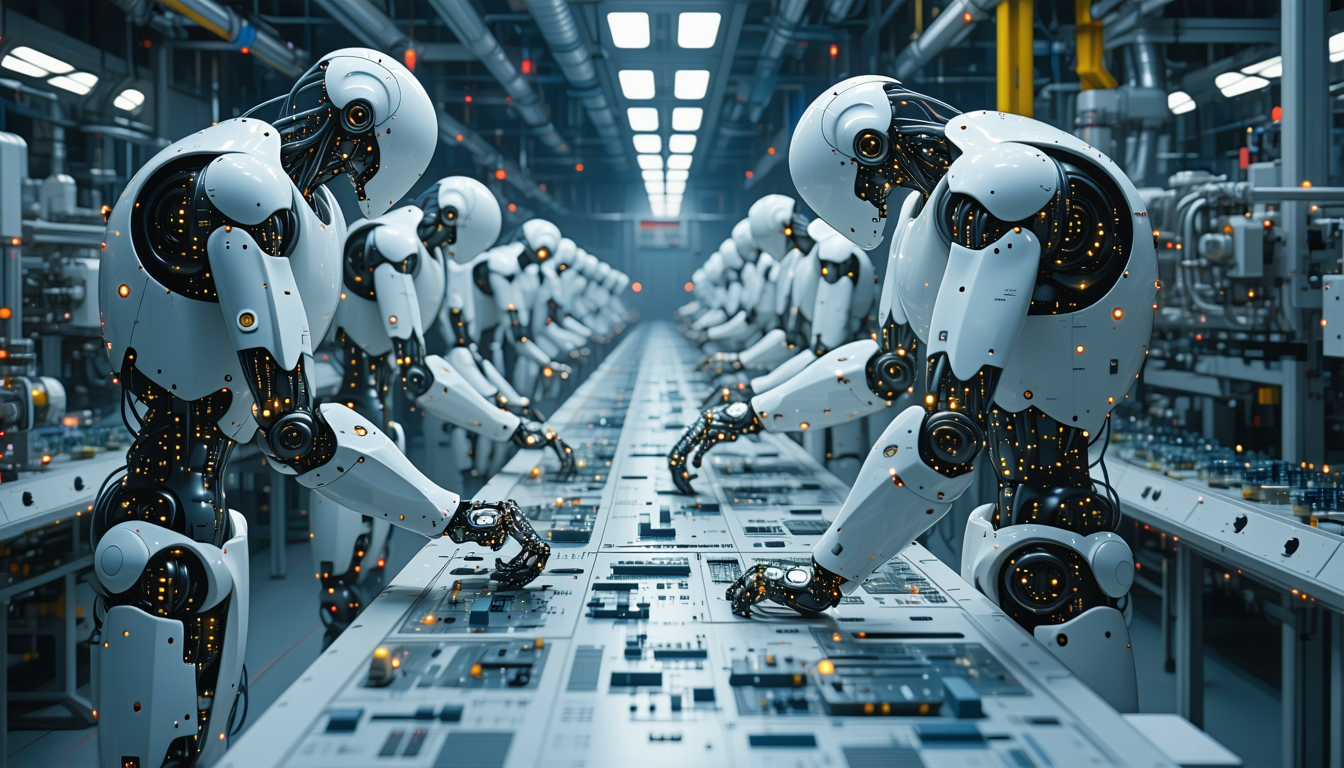
A major breakthrough in robotics has emerged from eastern China, where humanoid robots completed an extensive real-world production trial that underscores the maturation of embodied artificial intelligence technology. The Shanghai-based company Agibot orchestrated the experiment at a manufacturing facility in Nanchang, where its robotic systems executed quality control and material handling operations continuously for more than 64 hours across a six-day work shift, successfully completing more than 60,000 individual production tasks with a 99.99 percent success rate.
The experiment was livestreamed publicly, allowing observers to assess robot performance in an actual industrial setting rather than controlled laboratory conditions. This approach contrasts sharply with earlier demonstrations that confined testing to specialized environments.
According to Dr. Yao Maocheng, senior vice president at Agibot, the true test of robotics advancement extends beyond simply proving technical capability. "The real challenge is no longer limited to showcasing the capabilities of robots, but rather their ability to work efficiently and stably within production lines and achieve economic value for factories," he stated. The trial was designed to furnish concrete evidence that humanoid robots have reached a stage of readiness for widespread commercial deployment.
Agibot has already surpassed production of 15,000 units, a threshold the company views as a critical step toward scaling humanoid robot adoption across industrial and commercial applications.
The timing of this achievement aligns with China's national development strategy. The country's five-year plan spanning 2026 to 2030 designates humanoid robots as a strategic focus area, reflecting Beijing's commitment to advancing smart manufacturing and accelerating artificial intelligence integration across industries.
International robotics leadership has taken note of these developments. Takayuki Ito, president of the International Federation of Robotics, observed that China is experiencing a fundamental transition away from conventional industrial automation toward sophisticated robots capable of performing varied and adaptable tasks.
Market projections suggest substantial growth ahead. Barclays Foundation forecasts that China's humanoid robot workforce could reach approximately 11 million units by 2035. However, current market conditions paint a different picture. Morgan Stanley research indicates that actual sales during the preceding year remained below 12,000 robots, revealing a considerable gap between future expectations and present-day market realities.
Industry observers view the Nanchang trial as evidence of humanoid robots transitioning from experimental laboratory phases into practical factory deployment. As artificial intelligence technologies continue advancing, this shift may catalyze transformative changes in industrial production methodologies globally.
Compare options


