Lebanon at Crossroads: Army Strengthening and Hezbollah Disarmament Take Center Stage
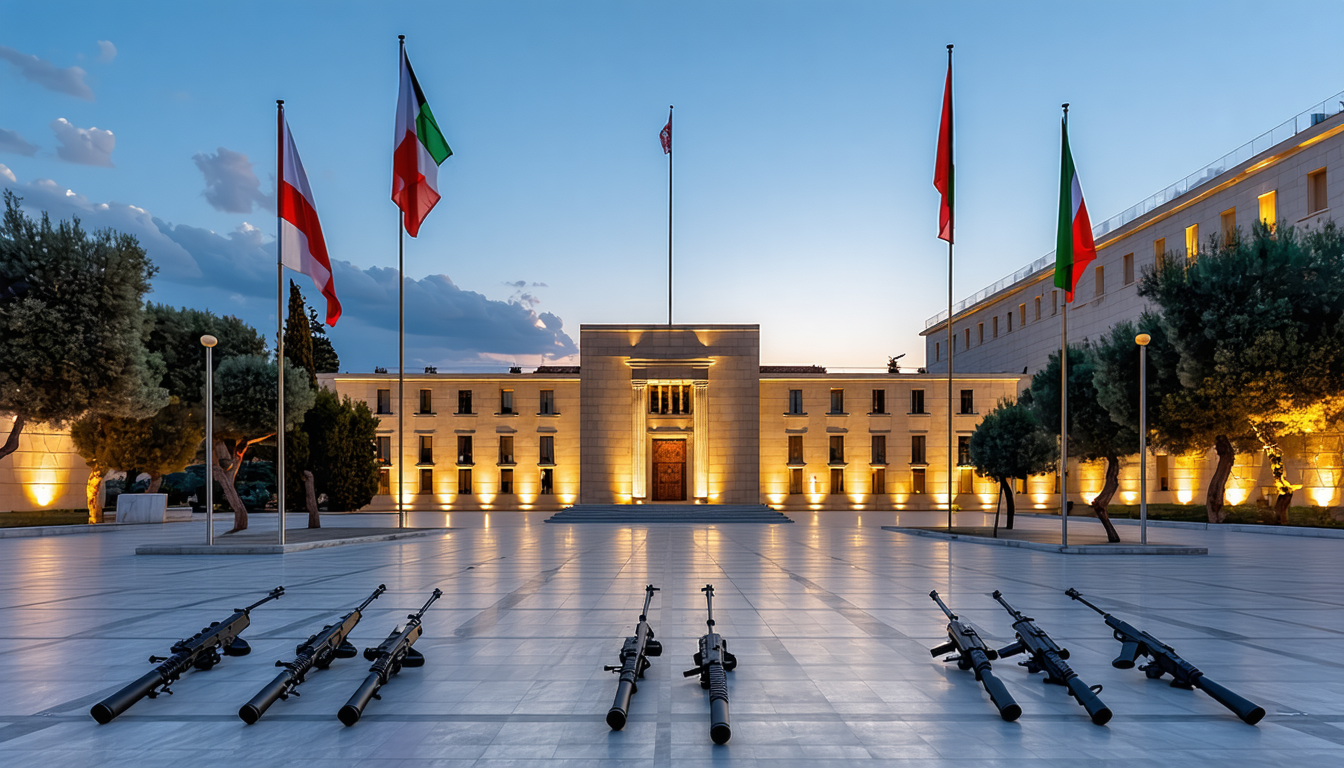
Diplomatic activity surrounding Lebanon's future is accelerating as French Foreign Minister Jean-Noel Barrot prepares for talks in Qatar on Monday, with ceasefire arrangements and military strengthening expected to dominate discussions between Paris and Doha.
Political analyst and writer Ali Hamadeh has outlined the critical nature of current developments, characterizing the military question as fundamental to Lebanon's trajectory. The matter of Hezbollah's weapons remains consistently present across Lebanese state deliberations, international forums, and Arab-level discussions, according to Hamadeh, regardless of the organization's own position on the subject.
Hamadeh points to government decisions issued on August 5 and 7, as well as March 2, as establishing the legal framework for disarmament efforts. He emphasizes that Lebanon's state apparatus maintains focus on its own institutional agenda rather than engaging with alternative narratives, whatever their source.
The analyst underscores that strengthening Lebanon's armed forces represents the immediate priority. Military leadership visited Paris earlier this year, followed by consultations with representatives from the five-member coordinating committee—comprising France, the United States, Saudi Arabia, Qatar, and Egypt—to assess institutional needs and capability development. These December meetings in Paris aimed to enable the army to extend state authority across Lebanese territory and consolidate weapons monopoly in state hands. A Paris conference was scheduled for March 5 to advance this agenda, though regional conflict escalation in late February and subsequent developments in Lebanon disrupted those plans.
Current negotiations between Lebanon and Israel in Washington, mediated by American intermediaries, seek permanent security and military arrangements. Hamadeh clarifies that these discussions center on establishing stability between neighboring states rather than pursuing normalization or diplomatic relations. He contends that achieving this stability would fundamentally undermine justifications for non-state armed groups maintaining independent arsenals.
Hamadeh argues that ending hostilities with Israel and moving beyond confrontational rhetoric would substantially weaken claims supporting weapons outside state control. Consequently, the disarmament pathway gains prominence, with military institution strengthening serving as its primary mechanism. Both France and Qatar have demonstrated commitment to this approach, with Doha recently hosting the army commander for capability-focused discussions.
Within the regional framework, Qatar functions as a coordinator among Gulf partners including Saudi Arabia, the United Arab Emirates, and Kuwait, with Doha undertaking direct coordination responsibilities on military support matters. The United States maintains its role as the military establishment's principal external supporter.
Hamadeh concludes that complete disarmament has become unavoidable given the convergence of Lebanese, Arab, international, and regional positions on the matter. While Hezbollah and Iran reject this path, he argues no viable alternative exists. The weapons have neither prevented Israeli operations nor achieved stated political or military objectives, and their retention has instead intensified conflict in southern Lebanon and surrounding areas. From this perspective, the resistance narrative has lost its foundational justification.
Compare options


