When Global Conflict Meets the Playing Field: A Century of Sports During Wartime
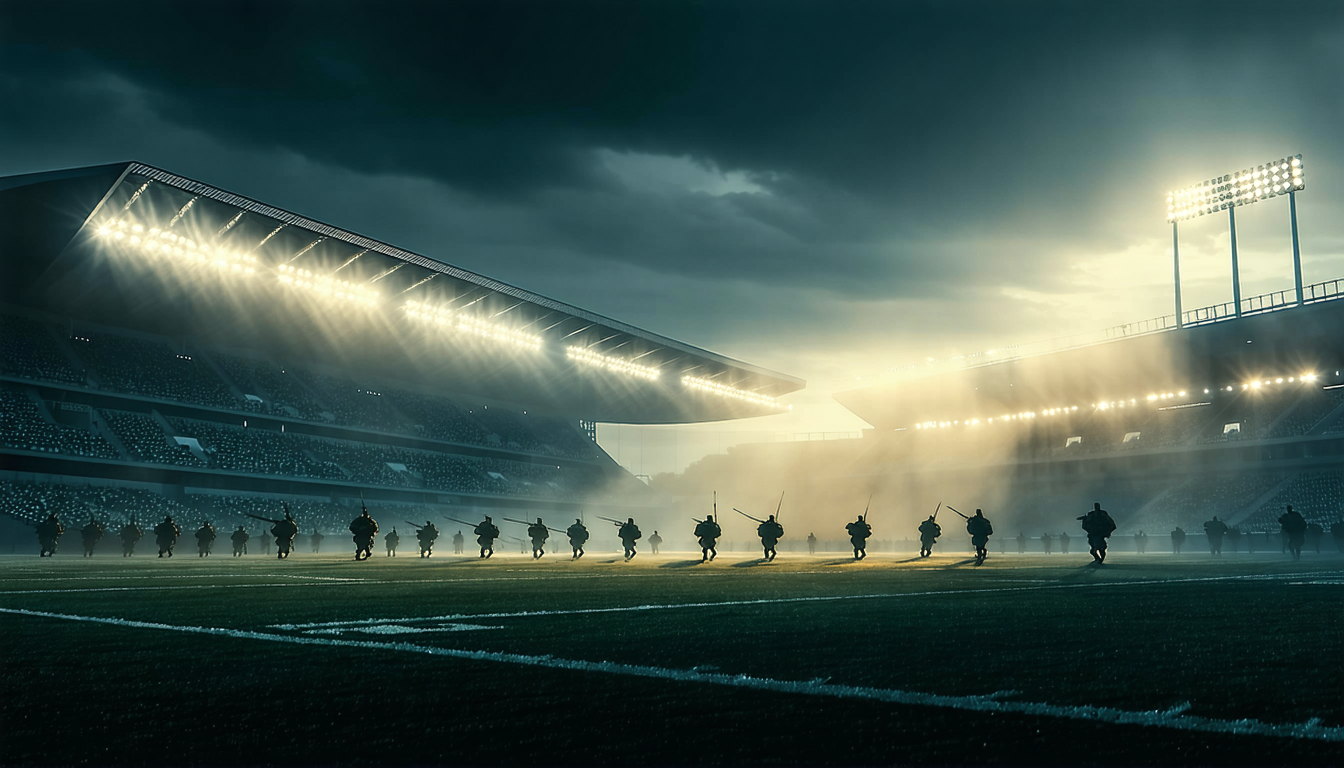
The relationship between sports and warfare stretches back more than a century, revealing a persistent pattern of athletic competition continuing—or halting—amid humanity's most turbulent periods. Neither the World Cup nor the Olympic Games have escaped the shadow of international conflict since their establishment.
Football's Wartime Journey
During the First World War, European football tournaments like England's Premier League and FA Cup initially persisted before eventually ceasing as combat intensified. Players enlisted for military service while the sport simultaneously served as a diversion for those on the front lines.
The inaugural World Cup in 1930 took place during the Great Depression, which prevented numerous European squads from traveling to the tournament. Despite these obstacles, the host nation claimed victory.
Eight years later, France hosted the World Cup amid mounting European tensions and the ominous approach of the Second World War. The 1942 and 1946 editions never materialized due to the global conflict, with the competition resuming in 1950 in Brazil as the Cold War and Korean War began.
Throughout the following decades, the World Cup maintained its schedule across multiple continents—Sweden in 1958, Chile, England, Mexico, West Germany in 1974—even as the Vietnam War raged. Regional conflicts did not prevent competitions either: the 1994 tournament proceeded in the United States during the Bosnian War, while France hosted in 1998 amid the Congo conflict.
More recently, South Korea and Japan jointly hosted in 2002 as fighting continued in Afghanistan. Germany staged the tournament in 2006 following the Iraq War, and Qatar held the 2022 edition after Russia's invasion of Ukraine.
The Olympic Games: Cancellations and Postponements
Since their modern revival in 1896, the Olympic Games have been cancelled only three times: 1916 during the First World War, and 1940 and 1944 during the Second World War. The 2020 Games faced postponement rather than cancellation, delayed by a year due to the coronavirus pandemic.
Berlin had prepared to host the 1916 Games before war intervened, leading to Germany's subsequent exclusion from participation. The 1940 cancellation followed repeated changes in host cities as warfare expanded globally. These two instances earned the designation "Lost Olympics."
Competition resumed in London in 1948, though participating nations faced restrictions stemming from their roles in the recently concluded war.
2026: Sports Against a Fractured World
The upcoming World Cup will unfold across the United States, Canada, and Mexico in 2026, a moment when multiple regions face heightened instability. American military operations in Iran, the ongoing war in Ukraine, conflict in Sudan, escalating violence in Gaza and Lebanon, and rising tensions worldwide create a complex backdrop for the tournament.
Tense American statements concerning Iran surfaced mere hours before the competition's scheduled commencement, while international actors worked to defuse tensions and prevent further escalation.
The fundamental question persists: Can sporting events truly transcend political realities, or do they inevitably become mirrors reflecting global conflict? History suggests the answer remains uncertain.
Compare options


