Inside Beirut's Tent Economy: Survival and Adaptation in Displacement
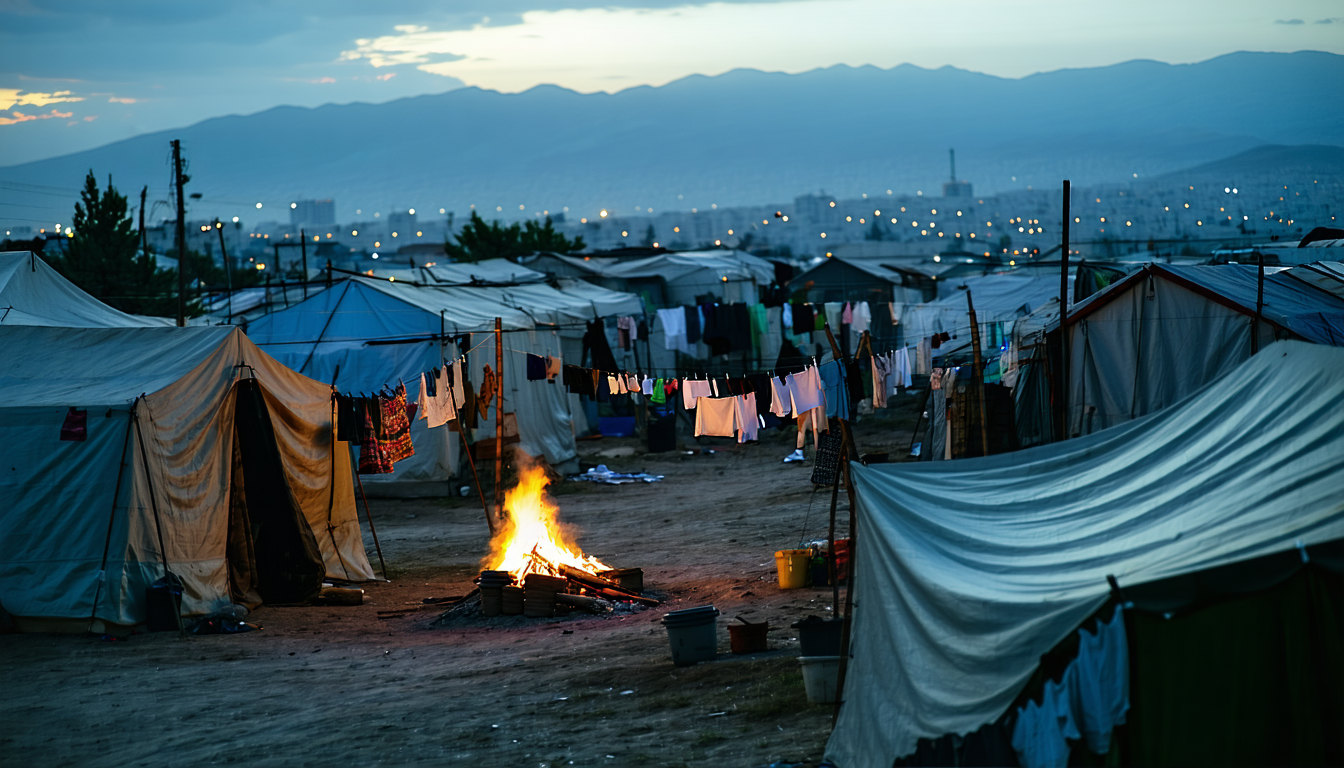
Prolonged displacement has evolved beyond an emergency situation in Lebanon. What began as a temporary crisis has gradually become an imposed way of life, with displaced families confronting fundamental needs—food, water, medicine, and clothing—while children seek activities, young adults search for employment, and women attempt to monetize their household skills as a means of survival.
This has given rise to what observers call the "tent economy," an informal system encompassing home-cooked meals, beverage service, basic food preparation, item repair, modest transportation arrangements, and the exchange of daily necessities among the displaced population itself.
Unlike conventional economic structures, this system remains fragile and unplanned, driven purely by necessity rather than strategic development. Yet it demonstrates a crucial human capacity: the ability to adapt under extreme hardship. Families stripped of their homes cannot indefinitely wait for comprehensive solutions.
The economic activity extends beyond the displaced themselves. Significant tent settlements within urban areas generate surrounding commercial movement. Nearby retailers experience increased sales, taxi services expand operations in adjacent zones, and small vendors capitalize on steady foot traffic. Community organizations mobilize to address emerging needs. Nevertheless, this activity does not alleviate the underlying crisis. Rather than representing genuine economic growth, it represents a survival cycle born from desperation—one insufficient to replace genuine return, stable housing, or long-term security.
This reality presents complex challenges for local authorities and stakeholders. As encampments transition from temporary to semi-permanent status, demands intensify for organized sanitation, water access, waste management, security, and healthcare services. Relations between displaced populations and neighboring residents require careful management, particularly if residents perceive service strain or fear the temporary arrangement may become permanent.
More fundamentally troubling is a critical distinction: while this economic activity might initially appear to demonstrate resilience, it actually signals the absence of viable alternatives. Displaced individuals do not launch enterprises because opportunities exist, but because survival demands it. Women preparing food for sale and young men seeking daily wages act not from choice, but from the pressure of lost homes, disrupted routines, and shattered security.
Beirut's tent settlements thus illuminate another dimension of the broader crisis. They serve as testimony not only to displacement itself, but to society's capacity to generate sustenance from the midst of systemic collapse. The pressing question persists: what duration can this tent-based economy realistically sustain?
Compare options


