Jerusalem Pride March Draws Thousands Under Heavy Police Presence
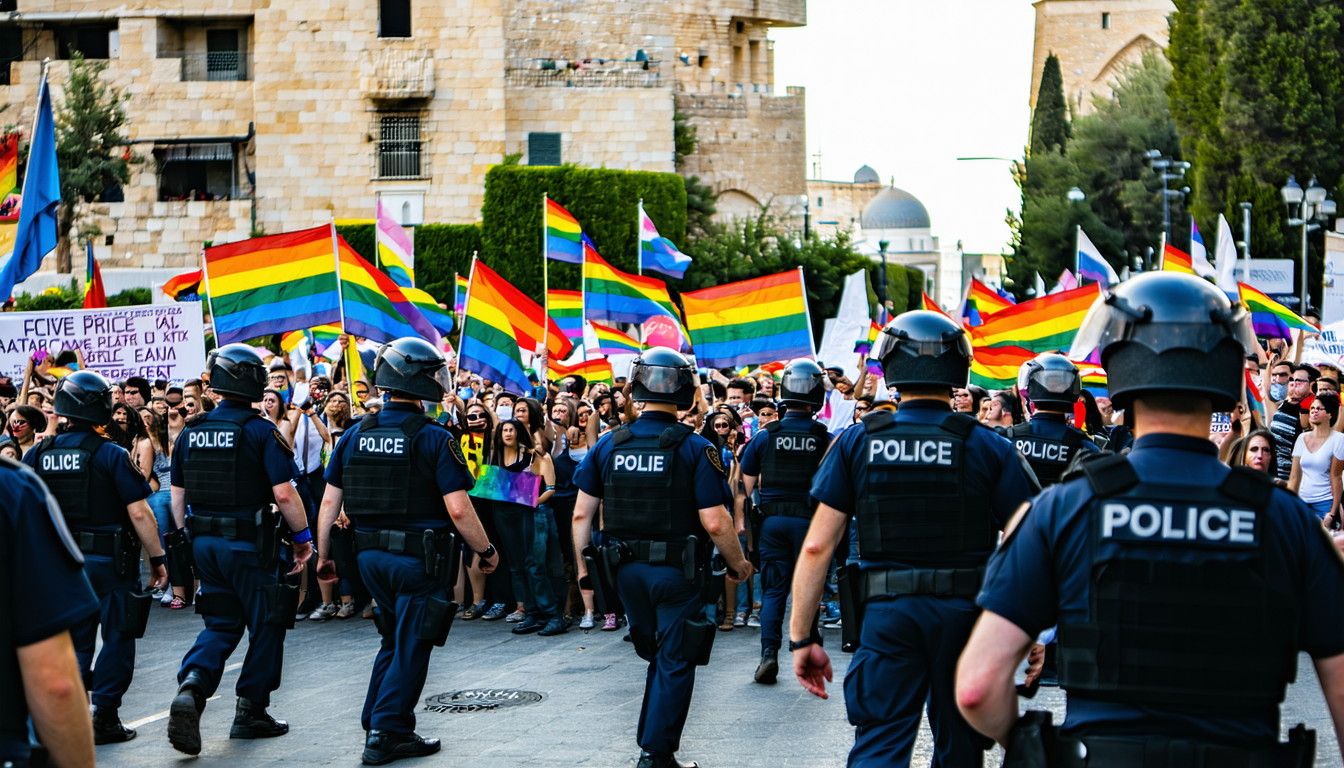
Jerusalem hosted a Pride March on Thursday in support of LGBT community rights, operating under the banner "We Demand Change" and protected by extensive police deployments. The event drew thousands of participants amid heightened security and concurrent counter-demonstrations.
According to Yedioth Ahronoth, marchers assembled at Saker Park before proceeding toward the Rose Garden adjacent to the Knesset. The route differed from traditional paths taken in previous years and was coordinated with the Jerusalem Brigade of the Israeli Police.
Members of the far-right organization Lehiva staged their own protest within a cordoned-off section of Saker Park. Police maintained separation between the march participants and opposing groups to prevent direct confrontations.
The opening platform featured several prominent figures, including opposition leader Yair Lapid, Knesset member Naama Lazimi, Deputy Mayor of Jerusalem Yossi Hafilio, and Adir Schwarz, the city's opposition leader and head of the "Awakening" movement, alongside various activists and participants.
Security preparations involved hundreds of officers from the Jerusalem Brigade, along with additional forces including border guards and other security units. The scale of deployment reflected the sensitive nature of the event and its location in the religiously significant city.
Lapid characterized the march as more than a celebration, describing it as carrying political and social weight. He committed that should his party form a new government, legislation ensuring equal rights for all couples in Israel—regardless of gender composition—would be enacted within the first 100 days. He framed the LGBT community's struggle as one for freedom, love, and democracy, and for a social approach grounded in acceptance rather than hatred.
In a related security matter, the Fike Reporter organization reported that threats distributed in leaflet form targeting march participants led to the arrest of an 18-year-old from Haifa. Police confirmed their ongoing security measures aimed at preventing potential tensions.
The Jerusalem Pride Parade remains among Israel's most contentious annual events, reflecting the city's religious and political significance. Each year it generates division between those viewing it as a platform for demanding civil equality and those opposing its organization in Jerusalem on religious and ideological grounds.
This year's march occurs within a broader political environment marked by tensions over civil rights and individual freedoms, complicated by the growing influence of right-wing and religious parties in government alongside opposition efforts to position themselves as defenders of freedom and legal equality.
Compare options


