Qassem Rejects U.S.-Brokered Deal, Vows Hezbollah Will Retain Arms and Continue Resistance
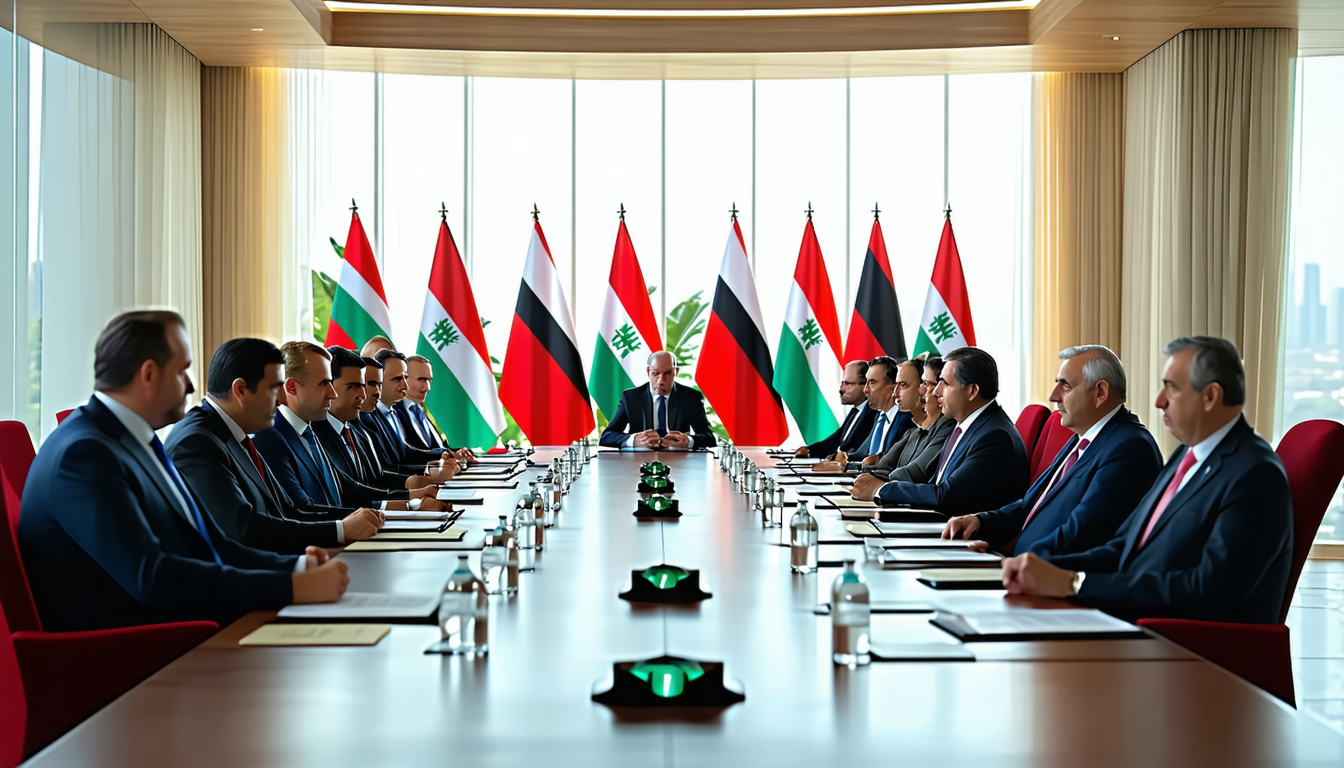
Hezbollah Secretary General Sheikh Naim Qassem has escalated his rhetoric against ongoing U.S.-mediated negotiations between Lebanon and Israel, characterizing the "Washington Declaration" as a mechanism designed to subordinate Lebanon and impose terms favoring Israeli interests.
In remarks delivered at a commemoration marking the passing of Imam Khomeini, Qassem emphasized that the resistance will not relinquish its weapons and has made no commitment to cease responding to Israeli military operations while attacks continue. He framed disarmament as equivalent to "the annihilation of Lebanon's power," arguing that Israel seeks through diplomatic channels what it failed to achieve militarily.
Qassem drew parallels between Lebanon's resistance movement and Iran's approach to confrontation with Western influence. He highlighted Iran's role in supporting Palestinian and Lebanese resistance as a cornerstone of its foreign policy since the 1979 Islamic Revolution, describing Iran as a model of steadfastness despite decades of conflict, sanctions, and international pressure.
The Hezbollah leader contended that the ceasefire framework under discussion cannot establish genuine stability while Israeli bombardment of Lebanese territory continues. He insisted that true security requires Israel to halt all military operations, withdraw from Lebanese soil, allow the Lebanese army to deploy south of the Litani River, release prisoners, enable displaced civilians to return home, and facilitate reconstruction efforts.
Qassem rejected any conditional linkage between the future status of the resistance and cessation of Israeli aggression, stating that such matters fall outside the scope of negotiations. He argued that internal Lebanese political questions should be resolved through constitutional dialogue and adherence to the National Accord Document rather than through external mediation.
Addressing Lebanon's domestic political situation, Qassem called on Lebanese authorities to strengthen national cohesion and bridge factional divisions. He urged government leadership to facilitate inclusive dialogue capable of unifying the Lebanese people in confronting current crises. He denounced what he termed the "farce" of direct negotiations and advocated instead for building a robust state apparatus capable of defending Lebanese sovereignty.
Compare options


