Iraq Returns to World Cup Stage After Four Decades with Challenging Road Ahead
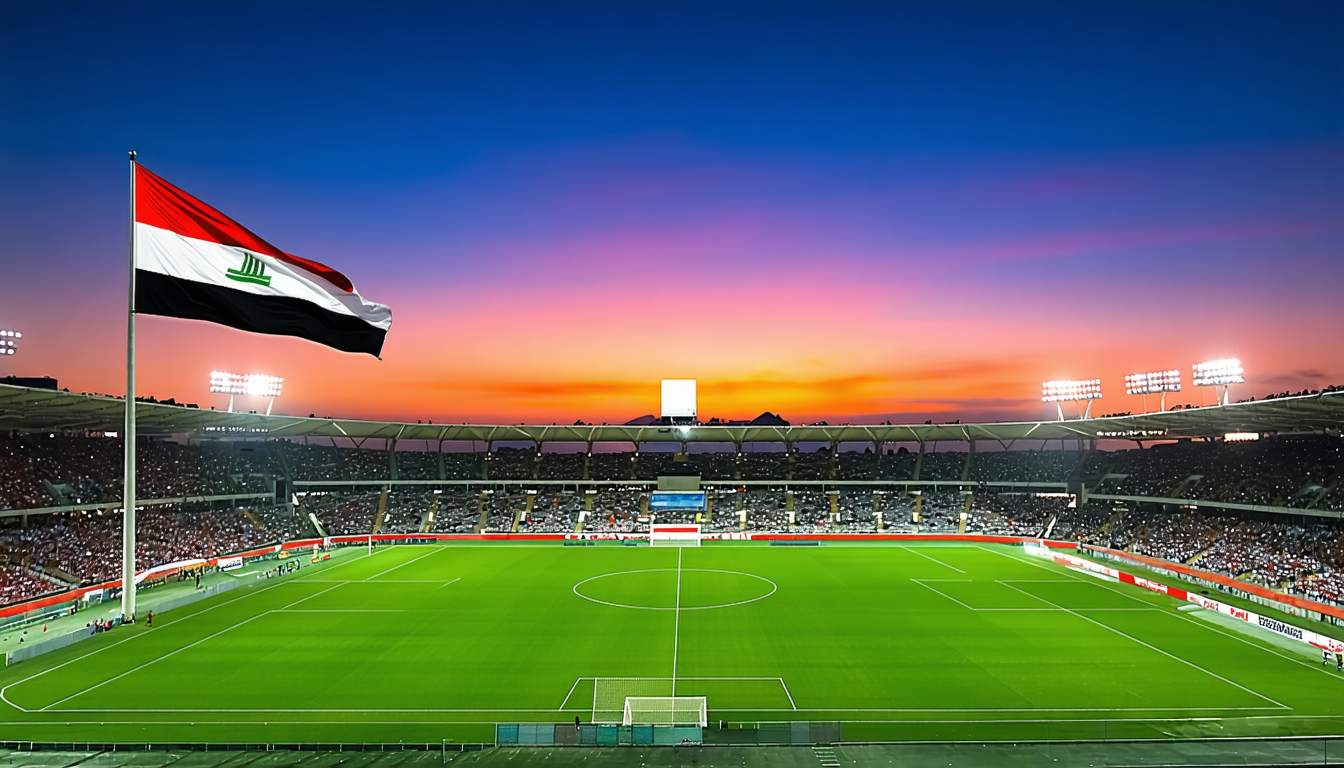
Iraq has secured a spot in the 2026 World Cup following a 2-1 victory over Bolivia in the continental playoff, ending a four-decade absence from the global tournament. Ali Al Hammadi opened the scoring, with Ayman Hussein delivering the decisive second-half goal that sent Iraq through to the finals as the last qualifying nation.
The achievement carries profound significance beyond football. Iraq's only prior World Cup appearance came in 1986 in Mexico, where the team exited at the group stage without a victory. This return represents far more than simply participating again—it marks a long-awaited restoration to the world's premier sporting stage.
Graham Arnold, who previously guided Australia to the Round of 16 at the 2022 World Cup in Qatar, now leads Iraq's charge. The coach has emphasized the importance of fighting spirit among his players, a quality he deems essential given the caliber of opposition awaiting his squad.
The team's attacking options center on Ayman Hussein, whose playoff heroics underscored his importance, alongside Ali Al-Hammadi, Ali Jassim, Muhannad Ali, Zidane Iqbal, Amir Al-Ammari, and Kevin Yaqoub. Rather than relying on a single standout performer, Iraq's strategy depends on collective discipline and coordination to bridge the experience gap against elite opponents.
The group stage draw presented a formidable challenge. Iraq finds itself in Group Nine with France, Norway, and Senegal—a bracket widely considered among the tournament's most competitive. The schedule begins with Norway in Boston, followed by a Philadelphia clash against France, and concludes against Senegal in Toronto on June 26.
The opening encounter with Norway carries particular importance. While the Scandinavian side possesses talented attackers, Iraq cannot afford to wait for later matches to accumulate points. This matchup will reveal how effectively the team can maintain its structure and exploit the individual quality of a strong Norwegian squad.
The France fixture represents the most daunting assignment. As one of the tournament's primary contenders, France brings elite-level talent throughout its lineup. Iraq's approach will necessarily focus on damage limitation—compressing space and avoiding an open, attacking contest that would favor the French.
Should Iraq advance to face Senegal in the final group match, it may encounter a physically demanding and rapid opponent, potentially with stakes riding on the result.
Realistic expectations suggest that advancing beyond the group stage would constitute a significant accomplishment for Iraq. However, the broader objective extends beyond a fleeting return. The team possesses the motivation, fan support, and determination necessary for success, but will require meticulous execution in every competition. For Iraq, the 2026 tournament represents not merely a comeback after 40 years, but an opportunity to demonstrate that its place among football's elite nations reflects genuine capability rather than circumstance.
Compare options


