Escalating Military Confrontation: Iran Launches Missiles and Drones at U.S. Installations in the Gulf
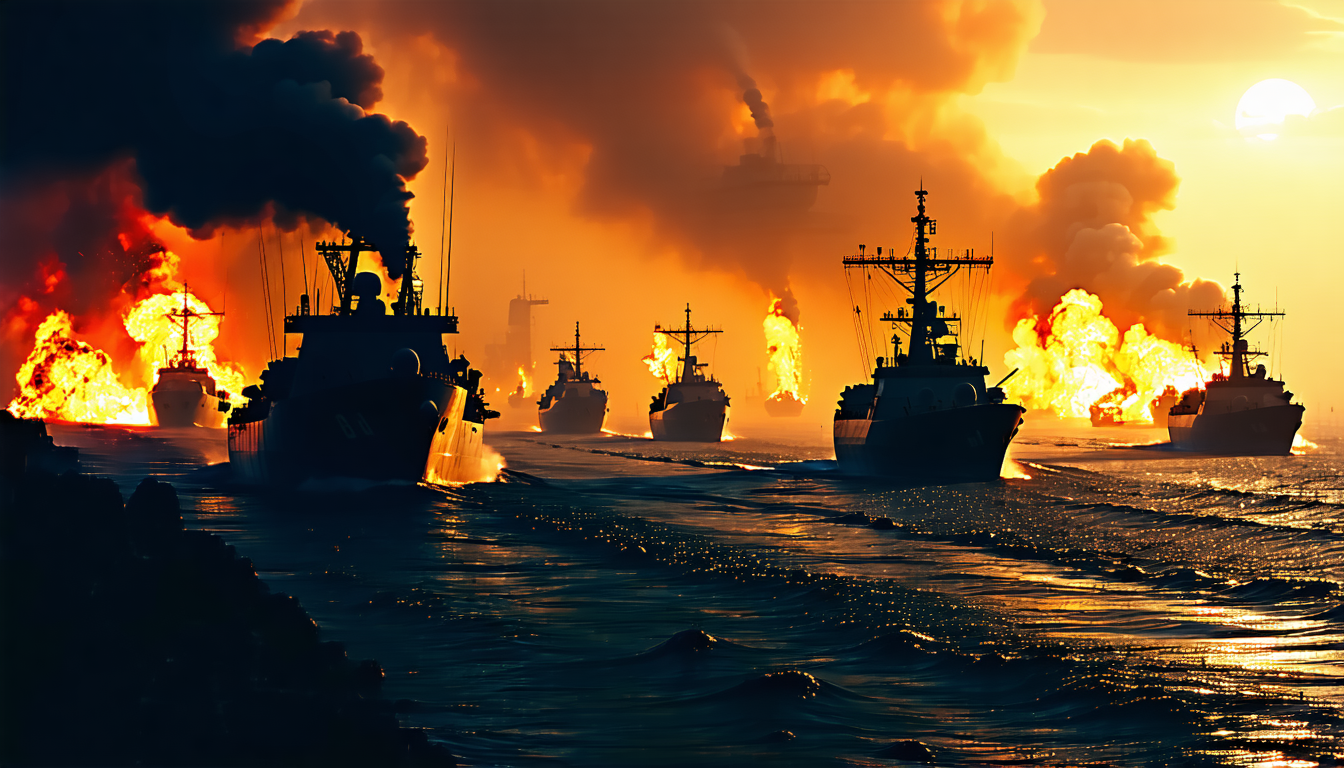
The Persian Gulf witnessed one of the most intense periods of direct military engagement between Washington and Tehran in recent months, marked by strikes targeting oil infrastructure, civilian vessels, and military installations.
The confrontation erupted after American forces identified what they characterized as a breach attempt of the naval embargo affecting Iranian ports. According to U.S. Central Command, the oil tanker "Lexi"—blacklisted by American sanctions since March for allegedly carrying millions of barrels of Iranian crude—was bound for the Kharg Island petroleum facility.
U.S. forces responded by deploying a Hellfire missile from an aircraft that struck the vessel's engine compartment, rendering it inoperable before reaching its intended destination.
Iran's retaliation came swiftly. American military officials reported that Tehran dispatched suicide drones toward commercial shipping traffic traversing the Gulf. U.S. forces subsequently destroyed three of these drones over territorial waters.
In parallel, American forces executed what they characterized as "defensive operations" targeting Iranian military command infrastructure on Qeshm Island, which sits at the entrance to the Strait of Hormuz—a critical global shipping corridor for energy supplies.
Following the destruction of these command facilities, Iran intensified its campaign by firing ballistic missiles toward American military bases in Kuwait and Bahrain.
U.S. Central Command asserted that the Iranian missile offensive proved ineffective. Two missiles aimed at Kuwait failed to reach their targets, while three missiles directed at Bahrain were neutralized by combined U.S. and Bahraini air defense systems.
The Iranian Revolutionary Guard attributed the escalation to American actions, characterizing the strike on the "Lexi" tanker as the initial provocation. The Guard stated that its forces responded to what it termed "American aggression," targeting facilities of the "American-Zionist enemy" and specifically responding to the destruction of a communications installation on Qeshm Island.
U.S. Central Command rejected Iran's account entirely, issuing a statement that read: "American forces successfully thwarted multiple attacks by Iranian ballistic missiles and drones, and no American personnel were harmed. As for Iranian claims about targeting the headquarters of the Fifth Fleet, they are false." The command emphasized that the Fifth Fleet headquarters in Bahrain sustained no damage or casualties.
This latest episode represents an extension of recent direct military exchanges spanning several days, featuring American operations within Iranian territory alongside Iranian strikes against American military positions throughout the region.
The shift from proxy-based conflict to direct bilateral military strikes underscores an unprecedented level of hostility. Regional observers express concern that the Gulf could emerge as an open theater of conventional warfare, potentially transcending the boundaries of conventional military posturing.
Compare options


