Israeli Military Probes Hezbollah's Potential Night-Time Drone Operations Capability
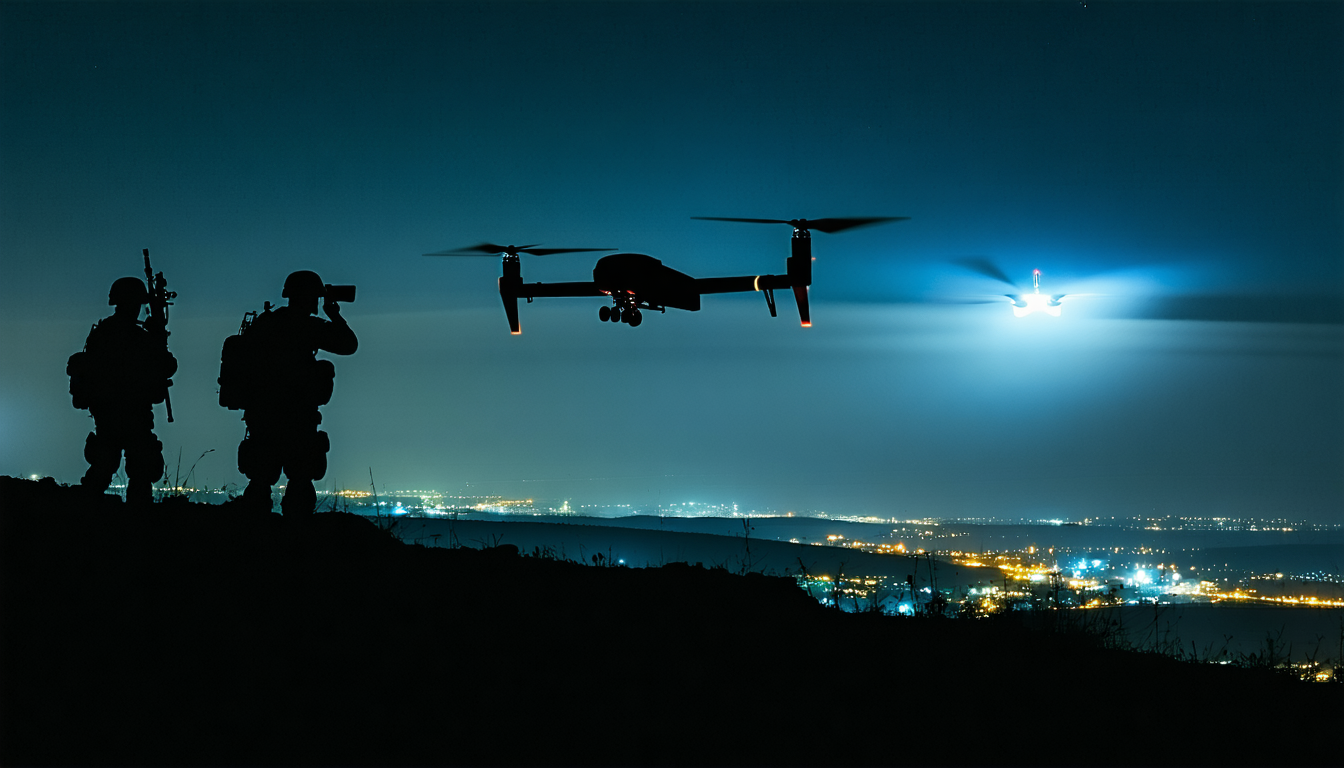
Israel's military establishment is grappling with fresh concerns about Hezbollah's operational capabilities following a series of nighttime drone attacks emanating from southern Lebanon, raising questions about whether the militant group has achieved the technical sophistication to conduct nocturnal strikes with precision.
An investigation detailed in reporting by Israeli journalist Itay Blumenthal for the Israeli Broadcasting Authority's "Kan" channel reveals that the Israeli military has been examining, over the past two weeks, whether Hezbollah possesses technology enabling the operation of explosive drones after dark.
While Israeli military officials view the development of such capabilities as an inevitable progression, they stated to the broadcaster that current evidence does not yet substantiate the use of thermal imaging or advanced night vision systems aboard the drones involved in recent southern Lebanon operations.
The investigation intensified following a succession of nighttime drone assaults by Hezbollah that resulted in two Israeli military fatalities: Sergeant Adam Tsarvati of the "Maglan" unit and Sergeant Michael Tyukin of the "Givati Reconnaissance" battalion. An additional ten Israeli soldiers sustained injuries from comparable nocturnal attacks, prompting the military to accelerate its analysis of the technical methods Hezbollah may be employing.
Preliminary findings into the circumstances surrounding Tyukin's death established that a full moon illuminated the night in question, and the soldier's position was situated in an illuminated zone, either from fixed infrastructure or ambient light from nearby roads.
According to the report, subsequent Hezbollah drone strikes targeted locations bathed in artificial light or vehicles traveling with headlights engaged. This pattern has led Israeli military analysts to investigate whether the casualties stem from environmental lighting conditions alone or whether Hezbollah has acquired supplementary night surveillance capabilities.
In response, the Israeli military has reinforced operational protocols for troops positioned within Lebanese territory, particularly governing nocturnal movement, positioning, and the minimization of visible light sources.
The scope of this military inquiry underscores mounting Israeli apprehension regarding Hezbollah's expanding drone arsenal. Should the organization succeed in establishing effective combat operations under cover of darkness, it would present a significant operational challenge to Israeli forces in southern Lebanon and compound the expenses associated with ongoing ground campaigns in the region.
Compare options


