Pentagon Pursues Massive Drone Arsenal as Ukraine and Iran Reshape Military Strategy
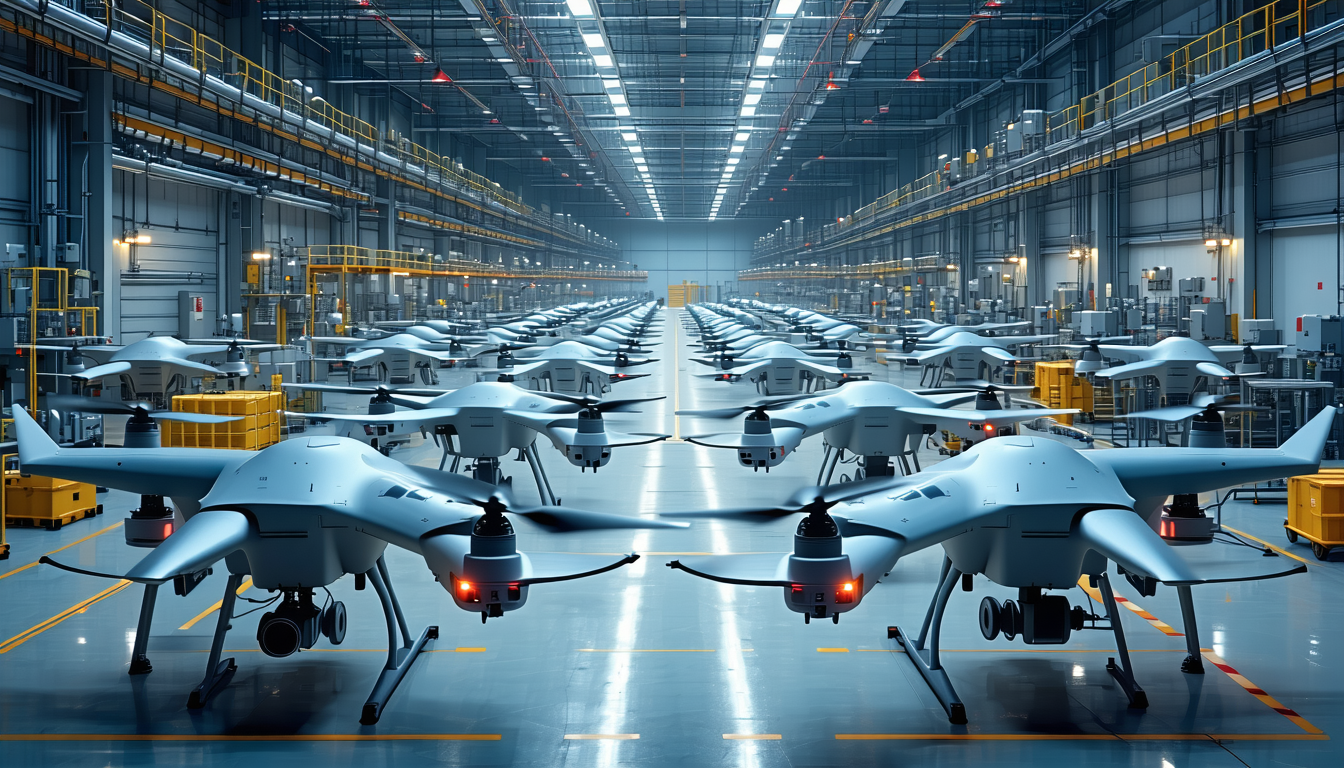
Recent conflicts have prompted a fundamental shift in American military doctrine. The U.S. Department of Defense is now pursuing an ambitious initiative to mass-produce hundreds of thousands of inexpensive suicide drones, recognizing that small unmanned aircraft have become instrumental in reshaping contemporary combat.
The Pentagon's vision centers on a $54.6 billion initiative launched this year, featuring an 18-month competitive program titled "Drones Dominance." The goal is to identify manufacturers capable of supplying the U.S. Army with as many as 300,000 affordable unmanned systems designed to be deployed and expended in combat operations.
The competition has attracted an unconventional array of participants. Beyond traditional aerospace firms, the field includes companies with backgrounds in golf course analysis, aerial light shows, and one founded by a 23-year-old former drone racing world champion named Soren Munro Anderson, whose company Neros now competes alongside the British firm Skycutter and its Ukrainian partner.
Military leadership has identified critical vulnerabilities in existing American capabilities. Observers note that Ukraine and Iran have effectively deployed small, economical drones to execute sophisticated offensive operations, exposing gaps in conventional military preparedness.
The Pentagon has allocated $1.1 billion in prizes and defense contracts to winning companies during the competition's initial phase. These funds aim to accelerate production of aircraft that officials describe as "cheap flying bombs," each manufactured at approximately $5,000 per unit and intentionally engineered as expendable systems.
Anderson emphasized the competitive environment, stating that the Army conveyed confidence in the initiative from its inception. "I like the fact that the competition keeps everyone on constant alert. There are no free meals in the race for drone dominance," he remarked.
The initiative reflects a strategic reorientation within the Defense Department toward smaller, innovative enterprises rather than exclusively relying on established defense contractors. Travis Metz, deputy director of the Defense Innovation Unit overseeing the project, expressed confidence in emerging entrepreneurial capabilities: "I'm very optimistic about the amount of entrepreneurial talent out there. The Defense Department doesn't have to fund all the research and development itself."
Ukrainian forces have demonstrated the tactical potential of these systems by adapting techniques from competitive drone racing to achieve precise strikes against Russian armor across battle lines. Iranian forces similarly deployed comparable platforms in offensive operations, including activities near the Strait of Hormuz in proximity to significant American military infrastructure.
Anderson drew parallels between drone racing expertise and military application, explaining that the precision required extends beyond target acquisition. "It is not just about hitting the tank, but about hitting the specific part of it very precisely," he noted.
Not all military analysts view the Ukrainian model as directly transferable to American operations. Crispin Burke, a former helicopter pilot and drone systems expert, expressed reservations about scaling the concept for American forces operating in more fluid tactical environments. "It may be a bit of a stretch to try to get these huge numbers. If the army is constantly advancing, where will it carry all these drones?" Burke questioned.
Metz countered that evolving battlefield conditions will increasingly favor drone-centric approaches, even if American tactics diverge from Ukrainian precedents.
The Pentagon has implemented a structured evaluation process called "Droner Dominance Corridors," subjecting competing systems to progressively challenging field tests conducted at military facilities. The framework progressively increases contract values for advancing competitors while reducing per-unit costs for the Army.
The initial competition round, held last February at Fort Benning, involved twenty-six participating companies. Evaluation criteria included precision targeting of office-sized objectives from distances exceeding six miles and accuracy in strikes against enclosed structures.
Skycutter emerged from the first round with the highest ranking, securing an initial contract to deliver 2,560 units. Other competitors advanced to subsequent evaluation phases while refining their systems.
The substantial American investment reflects deepening consensus within military leadership that future conflicts will depend not solely on advanced fighter aircraft and precision-guided missiles, but increasingly on coordinated swarms of low-cost unmanned systems capable of fundamentally altering engagement patterns across global theaters of operation.
Compare options


