Competing Narratives Threaten Historical Truth About Druze Founding Figure Prince Abdullah Al-Tanukhi
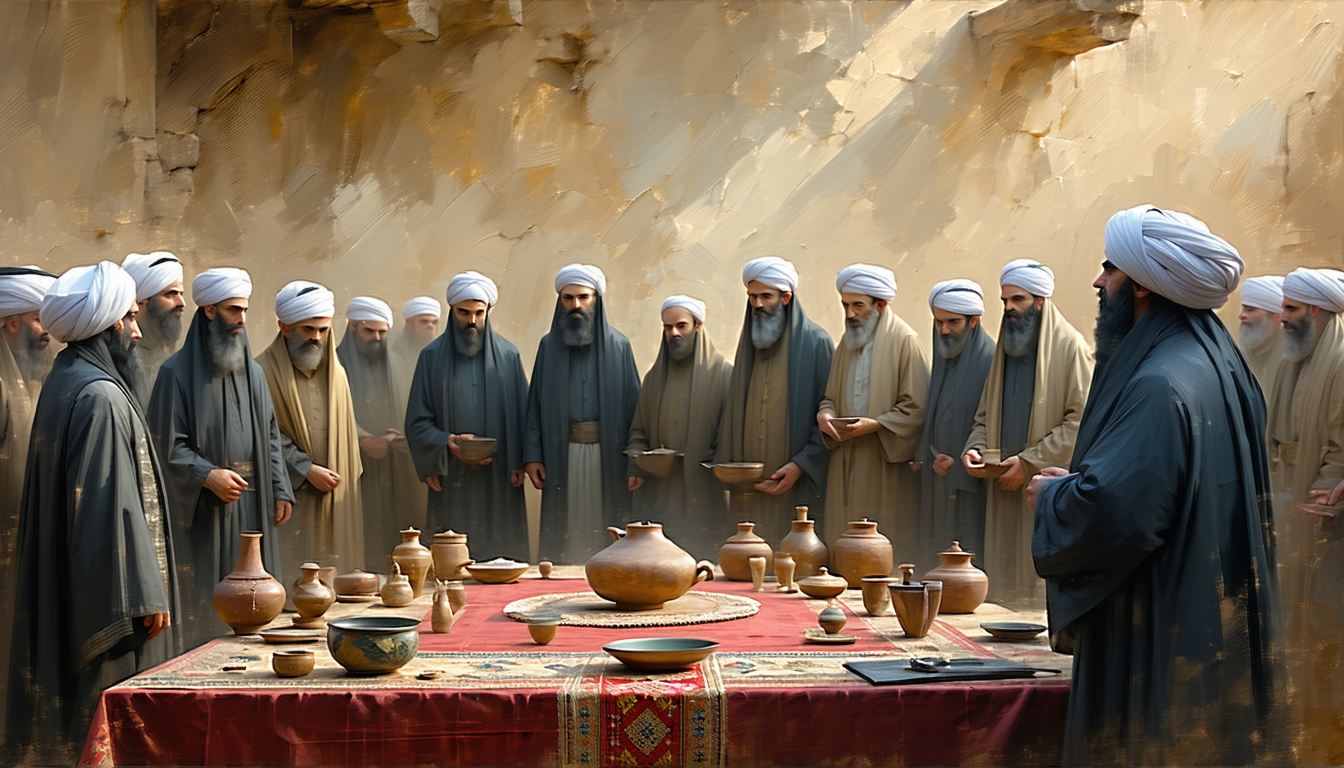
Recent months have witnessed intensified campaigns targeting prominent figures and historical symbols within the Druze Unitarian community, with a notable shift in focus. The attacks have moved beyond contemporary leaders to encompass one of the most significant architects of Druze identity throughout history: Prince Jamal al-Din Abdullah al-Tanukhi.
What distinguishes this moment is that the assault on the prince's legacy does not emanate from a single source. Rather, two seemingly opposed political and intellectual movements—each at odds with the other—have converged around a shared objective: reframing his life and work to serve modern political agendas disconnected from the historical circumstances in which he lived and the contributions he made to establishing Druze Unitarian identity.
Prince Abdullah al-Tanukhi transcends the role of mere religious scholar or jurist of a particular era. He stands as one of history's most consequential guardians of monotheistic tradition, instrumental in defining the Druze sect's theological distinctiveness and shaping the intellectual and religious foundations that would endure for centuries. This very significance has rendered him vulnerable to competing reinterpretations, each faction seeking to conscript his legacy into service of its own agenda.
The first movement endeavors to position the Druze within a broader Sunni political and sectarian framework. Partisan media platforms have proliferated with content addressing the prince's biography, ostensibly in his defense or as rebuttal to critics. Yet numerous observers contend that the real issue extends beyond defending the historical figure—it concerns the manner in which such defense is constructed.
These presentations go beyond acknowledging his connection to Islamic civilization. They venture further, attempting to cast him as a Sunni figure in contemporary sectarian terms, implying that Druze tradition represents merely an extension of Sunni doctrine.
The contradiction here runs deep. A man whose life's work centered on establishing Druze religious autonomy and distinctiveness now finds his name employed to justify the dissolution of precisely that specificity. The guardian of a sect's identity across centuries of transformation is being portrayed as if that very identity lacked historical foundation.
The second trend operates through a different mechanism. It seeks to distance the Druze from their Islamic and Arab context, presenting the community as an entirely separate entity removed from the Islamic history from which it emerged and evolved. This campaign operates primarily through social media accounts—sometimes controlled by diaspora members, sometimes through fabricated profiles. Observers have raised concerns that Israeli intelligence services may be orchestrating elements of this initiative, aiming to sever the Druze from their historical moorings and establish alternative religious frameworks aligned with Israeli strategic interests. Such efforts intensified particularly in Suwayda following recent military operations and the subsequent loss of life.
These coordinated campaigns targeting the prince, religious leaders, and historical figures seek to fundamentally rewrite history in ways that uproot the Druze from their cultural and religious foundations, positioning them in opposition to the societies whose histories they inhabited as integral participants for centuries.
Within this landscape of contradiction, Prince Abdullah al-Tanukhi emerges as the central obstacle for both movements. The first requires his presentation as a symbol of Sunni doctrine to legitimize absorption into a Sunni political structure. The second demands distortion or denigration of his legacy to justify separation from Islamic and Arab contexts.
Yet the historical reality both movements obscure is far more nuanced. The prince embodied a distinct synthesis: profound Islamic engagement coupled with preservation of independent monotheistic identity. He neither advocated for Druze dissolution into other sects nor championed rupture with the Islamic world.
These campaigns against the prince systematically accompany broader targeting of religious authorities, spiritual references, and historical symbols of the Druze community. Identity transformation efforts characteristically commence with historical revisionism and reinterpretation of founding figures.
Amid this conflict, the position of His Eminence Sheikh Abu Yusuf Amin Al-Sayegh, the supreme spiritual authority of the Druze Unitarian sect, stands as a continuation of the historical mission: safeguarding identity as transmitted through generations from Prince Jamal al-Din Abdullah al-Tanukhi, rather than refashioning it according to contemporary political calculations and momentary interests.
The substantive struggle today concerns not the individual prince himself, but the principles he represents. Genuine defense requires neither instrumentalizing him within political projects nor extracting him from historical context, but rather examining his life as it occurred and recognizing the foundational role he played in establishing an identity that has persisted through sustained efforts at distortion and revision.
Compare options


