Iraqi Militant Leader Accused of Coordinating European Terror Network Reveals Meeting with Khamenei
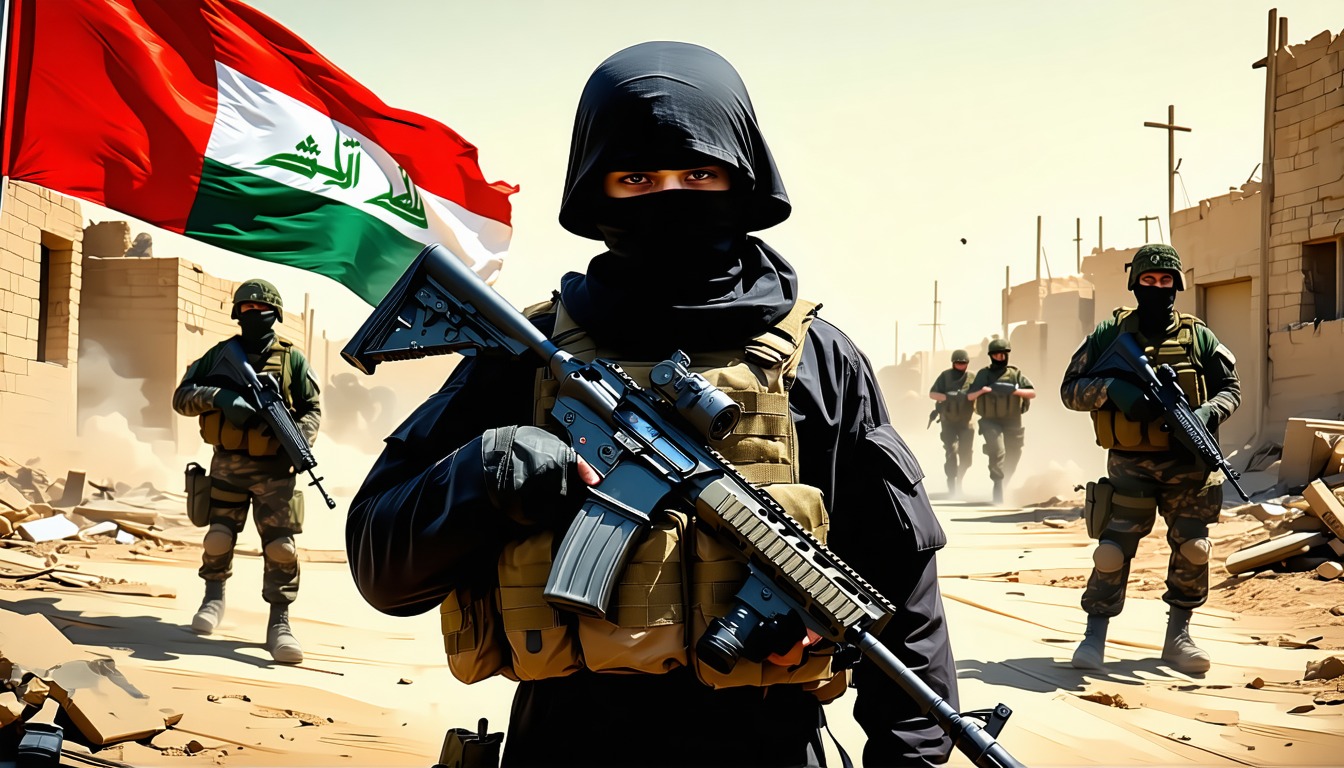
Court documents unsealed in a new American indictment have brought to light striking revelations about Muhammad Baqir al-Saadi, a senior commander within Iraq's Hezbollah Brigades militia. U.S. prosecutors allege that the 32-year-old dual Iranian-Iraqi national orchestrated a coordinated campaign of attacks targeting Jewish communities and Western interests across Europe and North America.
According to accounts reported in British media outlets, al-Saadi disclosed during questioning that he had met with Iranian Supreme Leader Ali Khamenei in Tehran approximately three days before the Iranian-Israeli confrontation erupted on February 28. Western intelligence sources told The Sunday Times that this account carried the ring of credibility.
The indictment charges al-Saadi with directing operations under the banner of "The People of the Right," which U.S. officials characterize as a shell organization concealing the activities of Kata'ib Hezbollah, an Iranian Revolutionary Guard-backed Iraqi militia. Prosecutors assert he bore central responsibility for planning at least 18 attacks throughout Britain and continental Europe, alongside schemes to target Jewish populations within the United States.
Federal authorities contend that al-Saadi personally supervised violent operations through video communications, including directing arson campaigns against Jewish facilities in London via FaceTime calls. Photographic evidence presented in court filings purportedly shows him coordinating attacks from a base in Iraq.
Turkish authorities apprehended al-Saadi weeks prior after he allegedly attempted to recruit an individual who turned out to be an undercover FBI operative posing as a member of a Mexican narcotics syndicate. Following his detention, he was transported to New York and faced eight terrorism-related charges.
The arrest sequence followed a pattern of attacks on Jewish institutions in London, including the burning of ambulances in the Golders Green neighborhood, an assault near a synagogue in Liege, Belgium, and damage to a Bank of America branch on Paris's Champs-Elysées.
Prosecutors allege that "The People of the Right" functioned as a recruitment hub for criminals worldwide who carried out operations on behalf of Tehran in exchange for payments in thousands of pounds sterling transmitted through cryptocurrency channels.
Following his arrest, al-Saadi waived his right to legal counsel and provided extensive testimony regarding his connections to senior Iranian officials. He described himself as "like a son" to Qassem Soleimani, former commander of the Quds Force within the Iranian Revolutionary Guard, who was killed in an American military strike near Baghdad airport in January 2020.
Court records indicate that al-Saadi actively participated in FaceTime conversations with operatives during attacks, recorded the operations, and helped create and disseminate propaganda materials. He also communicated with Hezbollah Brigades members regarding psychological warfare tactics and optimal timing for launching operations.
Examination of his mobile device uncovered a copy of "The People of the Right" charter, apparently drafted in March, containing the declaration: "As of today, we clearly declare that the United States, the Zionist-Israeli entity, and everyone who cooperates with them at any level will not be safe."
The organization claimed responsibility for a stabbing incident in the Golders Green area on April 29 that wounded two Jewish individuals, though British counterterrorism authorities questioned the authenticity of this claim, suspecting the group sought to capitalize on media attention without direct involvement.
Messages recovered from al-Saadi's communications showed him instructing associates to publish footage of the stabbing on the organization's platforms, followed by his statement: "If God grants us success tonight, there will be shooting in a restaurant." Investigators could not determine the location of the planned operation, which ultimately did not materialize.
The following day, the British government escalated its national terror threat assessment from "substantial" to "severe," signaling a dramatically heightened risk of attack.
The case underscores the intricate web of connections between Iran-aligned militant organizations and cross-border security operations, as Washington intensifies efforts to target individuals it views as components of the Iranian Revolutionary Guard's external operational apparatus.
Compare options


