Israeli Evacuation Order Marks Escalation in Southern Lebanon
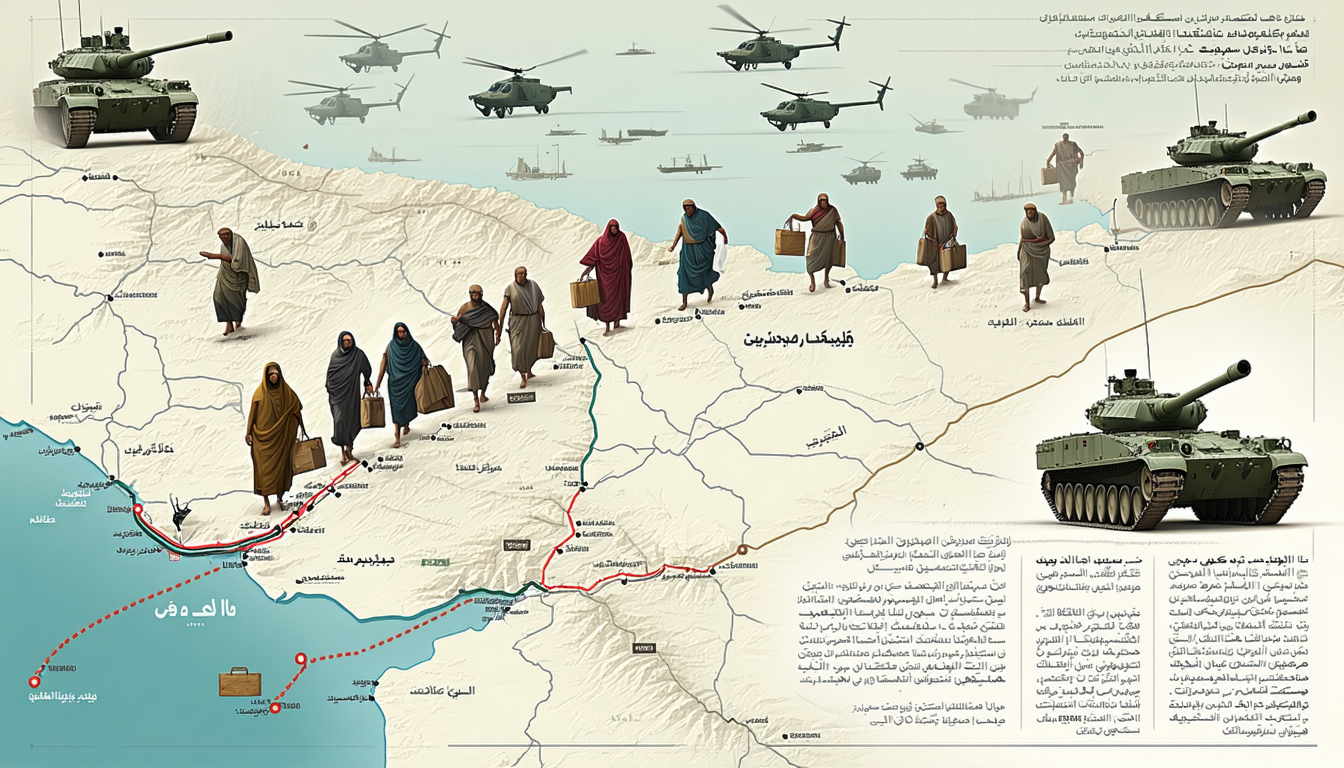
The Israeli military has instructed southern Lebanese residents to abandon their homes immediately and relocate northward across the Zahrani River, marking a significant shift in the ongoing conflict dynamics.
In an official statement, the Israeli army justified the directive by pointing to what it characterizes as Hezbollah's breach of the ceasefire arrangement and attacks targeting Israeli territory. The military indicated it would respond with forceful measures against the group in southern areas while asserting it aims to minimize civilian casualties.
The evacuation notice applies to all communities positioned south of the Zahrani River, as delineated on a map distributed by the Israeli military. Residents were warned that proximity to Hezbollah personnel, infrastructure, or military equipment poses a direct threat to their safety. The statement further cautioned that structures serving military functions could become targets and urged immediate northward movement, emphasizing that remaining in the designated zone risks loss of life.
The directive arrives amid intensified Israeli military activity across the south, particularly concentrated near Shaqif and Wadi Saluki. Israeli media outlets report efforts to consolidate control over strategically important locations following recent confrontations involving heavy artillery and aerial bombardment.
Simultaneously, Israeli warnings have expanded to multiple southern municipalities, while Hezbollah maintains announcements of operations against Israeli personnel and movements, employing drones, explosive devices, and tactical ambushes in contested zones.
The geographical scope of the evacuation order carries substantial implications. By extending warnings to this scale, Israel appears to be preparing the ground for deeper military penetration into southern Lebanon, moving beyond the limited border clashes that have characterized earlier phases of the conflict.
The Zahrani River holds particular strategic importance in southern Lebanon's geography, serving as a natural boundary between expansive southern territories and routes leading toward Nabatieh, Sidon, and coastal regions. Its designation as an Israeli warning line represents a notable intensification of both military pressure and psychological impact on the southern civilian population.
The evacuation calls have revived concerns about mass displacement and mounting civilian hardship in the south. Residents face successive waves of warnings and military operations while grappling with the possibility that additional areas could become subject to direct strikes.
Against this backdrop, both sides continue exchanging accusations of ceasefire violations. Israel appears focused on establishing new military facts through raids and territorial incursions, while Hezbollah pursues counter-operations designed to prevent Israeli consolidation of gains.
The combination of the Zahrani evacuation order and ongoing clashes across multiple locations suggests the south is entering a more precarious phase. Israeli communications now extend beyond military targets to encompass broad civilian populations and entire regions, amplifying risks of widespread displacement and uncontrolled escalation.
Compare options


