Orbital Hazard: Over 33,000 Pieces of Space Debris Pose Growing Risk to Satellites and Spacecraft
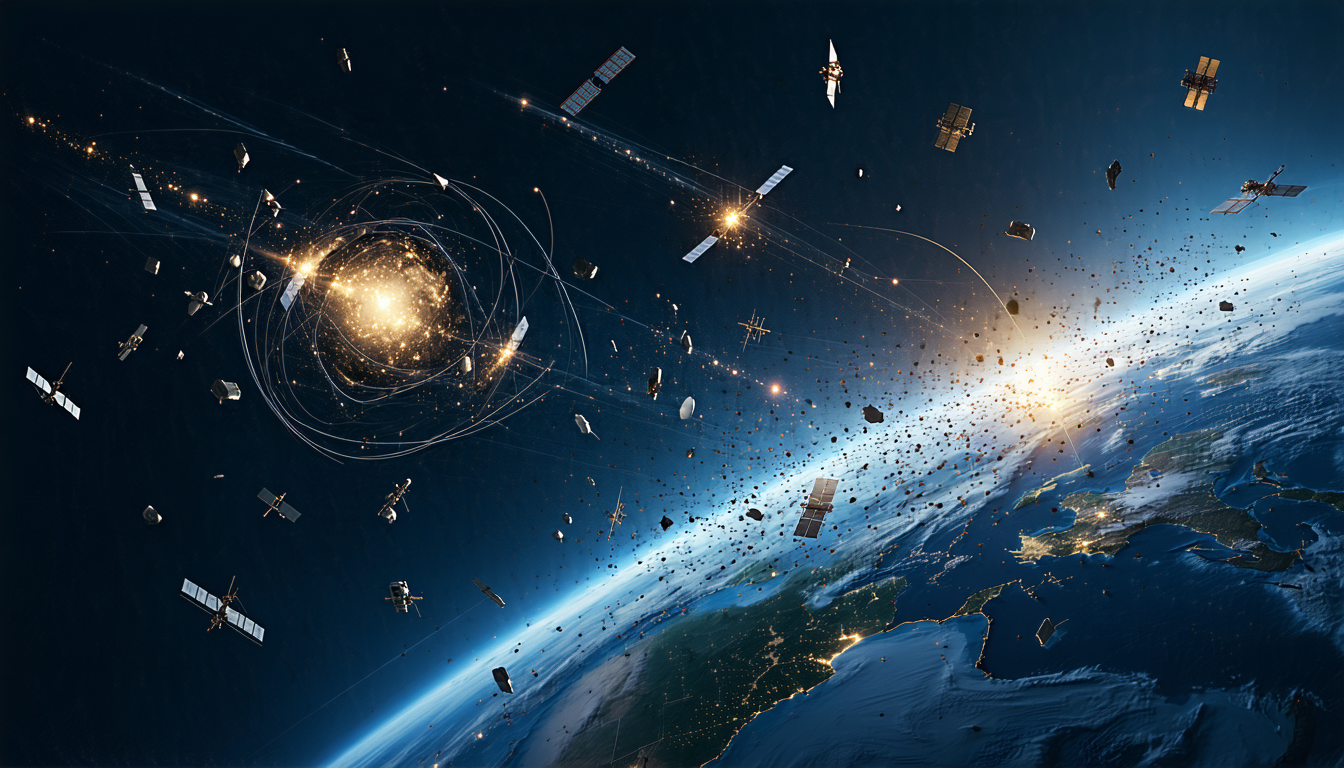
The accumulation of orbital waste has reached critical levels, with tracking systems monitoring over 33,000 objects circling the planet. Among these, approximately 12,550 are classified as genuine debris—comprising defunct satellite components, spent rocket stages, and fragmentation remnants—while roughly 17,682 remain operational satellites.
The velocity at which this material travels through space creates a formidable challenge. Objects moving at such extreme speeds can inflict catastrophic harm to functioning spacecraft, satellites, and orbital stations in low Earth orbit, regardless of their physical size.
The combined weight of all tracked debris exceeds 15,800 tons—a mass equivalent to roughly 40 large commercial aircraft completely destroyed and fragmented into countless pieces scattered throughout orbit.
A particularly troubling concern for space agencies is the phenomenon known as "Kessler Syndrome," a cascade effect where collisions between debris and satellites generate hundreds of new fragments. These newly created pieces then risk striking additional objects, perpetuating an expanding cycle of destruction.
Scientific consensus indicates that this crisis will intensify regardless of whether humanity halts all future space launches. The existing debris field alone possesses sufficient mass and velocity to generate cascading collisions that could dramatically worsen orbital contamination in the coming years.
Compare options


