Hezbollah's Nocturnal Drone Operations Emerge as Israel's Primary Concern on Northern Front
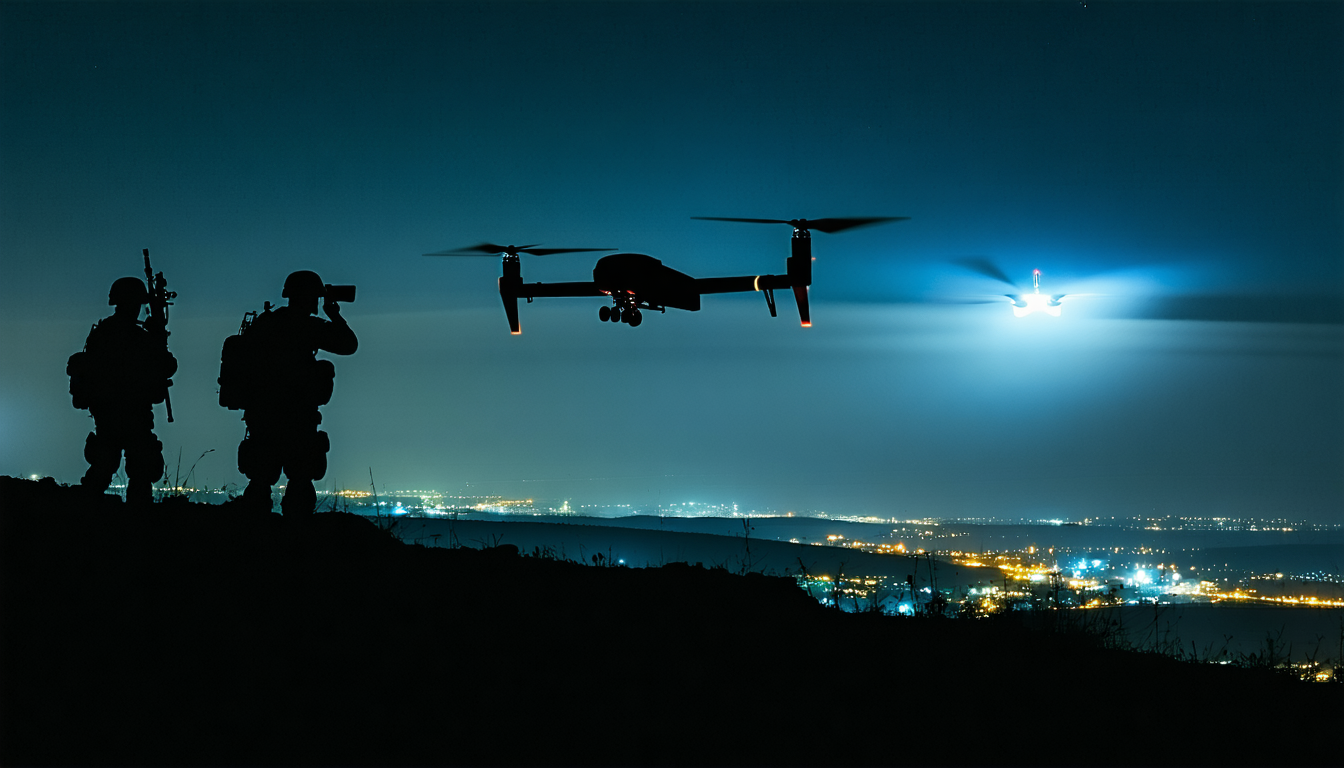
Israeli military planners have shifted their focus away from traditional threats. Weaponized drones deployed by Hezbollah now rank as the gravest danger facing Israeli forces along the northern border, having fundamentally altered the tactical landscape in recent weeks and introduced a new calculus of attrition for the Israeli army.
Drawing on reporting by journalist Anat Bild in the Wall Street Journal, Hezbollah operatives have demonstrated increasing sophistication in piloting unmanned suicide systems. They have incorporated night vision capabilities and first-person perspective (FPV) control technology—innovations that gained prominence during the conflict in Ukraine—to conduct operations under cover of darkness.
The weaponized drones have emerged as the deadliest factor in Israeli military casualties. Since the ceasefire between Lebanon and Israel took effect in April, these systems have accounted for seven of the eleven Israeli soldiers killed.
Hezbollah has released video documentation on social platforms depicting FPV drone strikes against fuel containers mounted on Israeli military vehicles. This methodology, mirroring Ukrainian combat techniques, maximizes destructive impact and collateral damage from secondary explosions.
The integration of night vision systems represents what Israeli security assessments characterize as a particularly troubling escalation. Operating drones across Israeli territory under darkness has compounded existing defensive challenges.
The drone developments coincide with diplomatic discussions between Washington and Tehran. Iran has signaled that any accord must encompass a cessation of hostilities in Lebanon. Israel, conversely, has urged the American administration to secure guarantees permitting continued military operations against Hezbollah.
The succession of attacks has intensified domestic pressure within Israel directed at Prime Minister Benjamin Netanyahu to implement harsher measures. These incidents have exposed what observers describe as vulnerabilities in Israeli defenses and have restored operational momentum to Hezbollah following earlier setbacks.
In response, Netanyahu declared that Israel would conduct strikes "with greater force" in Lebanon and pledged to expand ground operations and territorial control. The Israeli military subsequently increased bombing campaigns across southern Lebanon and issued broad civilian evacuation orders ahead of fresh operations.
Drone specialists attribute Hezbollah's effectiveness not solely to tactical refinement but also to Israeli defensive lapses. Soldiers and vehicles positioned in exposed, inadequately fortified locations have presented easy targets.
The Israeli military has begun installing protective barriers around installations and vehicles. It has simultaneously expanded training initiatives focused on drone countermeasures and has targeted drone production and launch facilities in southern Lebanon.
Tanya Koronos, a resident of Adamit near the Lebanese border, provided insight into the psychological toll. She recounted witnessing a drone overhead but expressed indifference born from exhaustion caused by continuous alerts. "I am angry with the government and decision-makers," she stated. "Either they go forcefully and completely dismantle Hezbollah's capabilities, or they conclude a real and viable agreement."
A significant technical advantage benefits Hezbollah operators. Approximately 80 percent of the organization's drones operate via fiber optic cable guidance systems, rendering them largely resistant to Israeli electronic warfare capabilities.
An Israeli defense official acknowledged that military forces have destroyed only "a small number" of drone operators, despite estimates placing their quantity in the dozens.
American analyst Samuel Bendet observed that Hezbollah drone pilots gain operational experience from each mission undertaken, regardless of outcome. "This is how things are developing in Ukraine," he noted.
Former Ukrainian military officer Dmytro Butiata reviewed footage released by Hezbollah and identified parallels to early Russian mistakes during the Ukrainian campaign. He questioned the adequacy of Israeli defensive preparations, asserting they remain substantially insufficient against this category of threat.
Israeli soldiers stationed in southern Lebanon report that Hezbollah has commenced nighttime operations in recent days. Current protective measures consist primarily of camouflage netting draped over equipment and weaponry—a modest response that underscores how drones have evolved from a tertiary weapon system into a central component of combat capability on the Lebanese front.
Compare options


