A Guide's Weariness: Reflections on Faith and Exhaustion in Lebanon
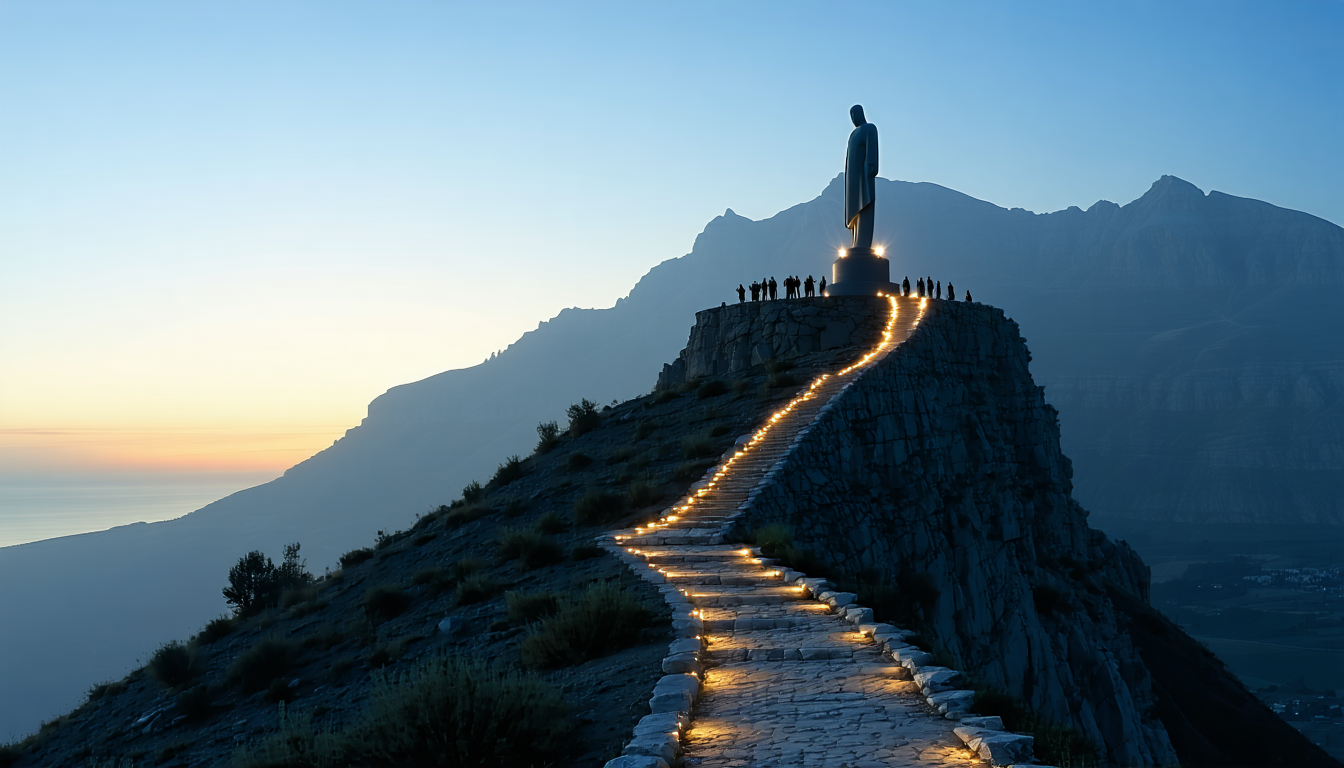
I live close enough to Harissa that the Virgin Mary's presence touches my daily life. Each morning brings its own encounters—yesterday, a middle-aged man appeared with a small religious image, seeking directions to the towering statue overlooking Lebanon from the mountainside, that luminous figure standing as perhaps the only enduring symbol of peace in this region. I pointed the way. Today, a woman with two children stopped me with the same question. I gestured toward the hill, gave her directions, and watched her vehicle climb slowly upward, as though ascending into something sacred rather than merely traveling a road.
That's when a subtle, tender irony struck me: I, who regularly direct others toward Harissa, haven't made the journey myself in ages. I send visitors to pray before the Virgin while I remain in my modest room, reaching out to her from my bed, from the weight of accumulated exhaustion and the peculiar silence that settles over the heart when one feels trapped by invisible forces others cannot perceive.
I recognize something holy in that statue. Not because monuments declare it so, nor because mountains elevate it above the valleys, but because the sorrow etched into her features mirrors the anguish of mothers standing vigil at the gates of conflict. She watches over Lebanon like a parent keeping watch through a child's illness—sleepless, unflinching before the wreckage, as though understanding that this nation, despite its sectarian divisions and shattered hearts, requires an embrace far more than it needs rhetoric.
She embodies holiness because she poses no question about allegiance to those gathered beneath her. Instead, in maternal silence, she asks simply: How weary are you?
For some time now, campaigns have been waged against me. I cannot fathom how faith in this country transformed into a daily interrogation. It appears people demand that believers expose their hearts for examination, or declare their convictions loudly enough to satisfy observers. They overlook something fundamental: authentic faith often unfolds in darkness, in those solitary moments when one confronts fear behind closed doors. Only then does a person truly know whether belief runs deep.
The accusations mount. Some claim I fail to match their vision of a proper Christian. Others resent that I refuse to weaponize faith for political gain, or use it as a sectarian barrier, or as a credential for group acceptance. Yet I learned long ago that Christ served no tribe, and the Virgin appeared above these mountains not to tally the political identities of her visitors.
Here, faith frequently becomes contested terrain. Crosses rise alongside flags. In certain speeches, churches transform into psychological fortifications. Yet when I observe carefully, I witness something different: a holy figure gazing upon a tired sea, upon cities long gripped by fear, upon mothers awaiting their children as she once waited beneath the cross.
This nation desperately requires intercession—not from spiritual poverty, but from a poverty of compassion. Politics has gradually consumed people's inner lives here, cultivating universal suspicion. Faith itself requires protection from those who claim it most zealously. The paradox cuts deep: love becomes a weapon, and God's name becomes justification for exclusion.
I recall those travelers who approached me for directions. Strangers, yes, but their faces held a simple certainty we have lost. They understood they journeyed toward something maternal. Meanwhile, I harbored a different plea: that the Virgin intercede for me—not because I am sinless, but because I exhaust under the weight of mistrust that pursues anyone attempting integrity in this region.
Perhaps, I considered briefly, even those who guide others hold small value. Doesn't the person directing the thirsty to water share in the blessing? Doesn't the one raising a hand toward the path participate, however modestly, in the arrival?
This reconciles me to my prolonged absence from Harissa. Some pilgrimages occur within the heart before the feet ever move. Prayer can commence in a confined room and ascend faster than entire processions. I cannot explain how grace distributes itself above, but I know the Virgin, who witnessed her Son accused, humiliated, and abandoned, understands those misunderstood on earth.
What brings me greatest solace is that she poses no inquiry about political conviction, faction loyalty, or social media metrics to those who come to her. Like all genuine mothers, she observes first the fatigue in one's eyes.
And I am exhausted, ma'am. Worn by the clamor, by hearts that judge rather than embrace, by a country where its people must defend their sincerity daily. If the guide possesses worth equal to the pilgrim, then remember me when you speak to your son. Let me rest one day beneath your mercy's shadow, even from this distance.
Compare options


