Lebanon's Industrial Sector Reels Under Twin Wars, Market Collapse, and Financing Crisis
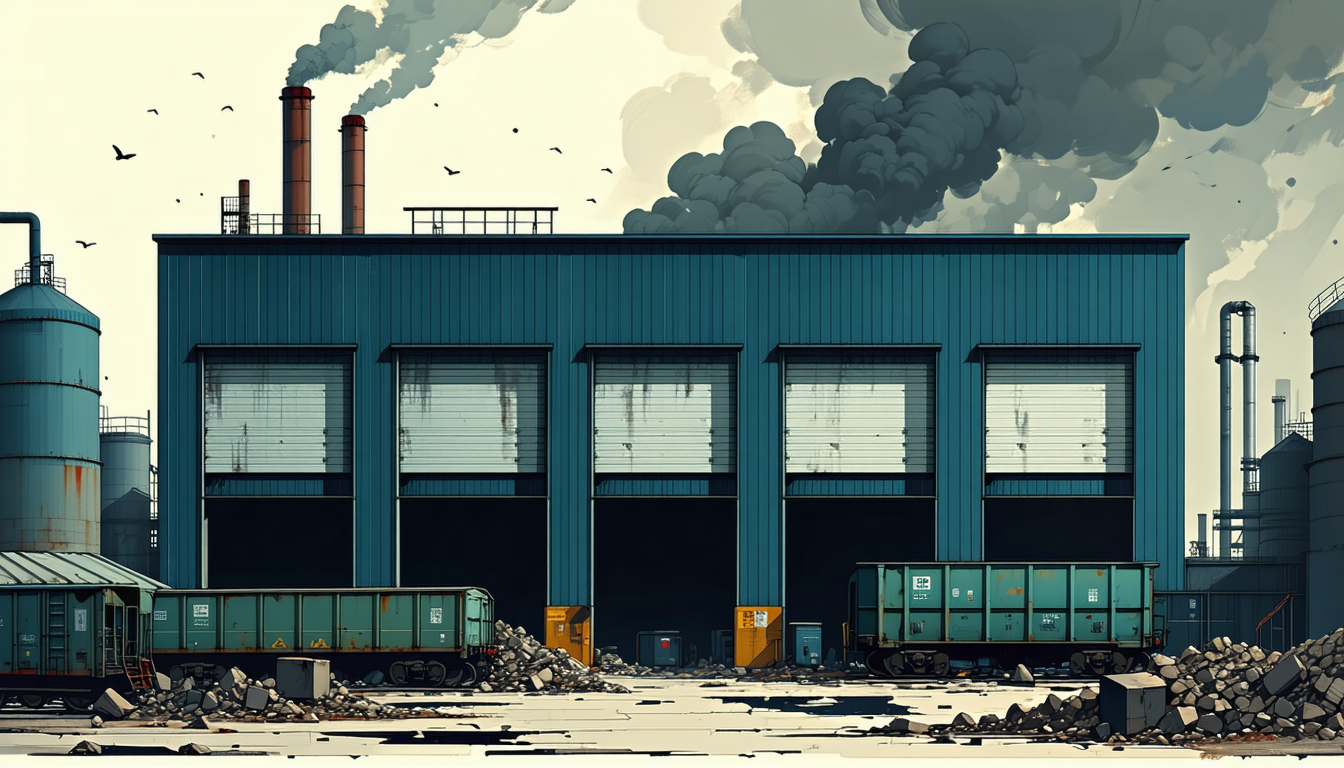
The rallying cry "If you love Lebanon, love its industry" once encapsulated a fundamental truth: a nation's strength derives from its productive capacity and self-reliance. Lebanese manufacturers built a reputation on quality and resilience, weathering multiple regional crises over the decades. That resilience is now being tested as never before.
The industrial landscape has transformed dramatically. What was once an economic cornerstone now confronts mounting pressures intensified by the repercussions of recent military conflict. The sector faces an existential crisis that extends far beyond temporary disruption.
Banking Support Evaporates
According to Ziad Bakdash, Vice President of the Industrialists Association, the 2026 war inflicted severe damage precisely when the economy was still recovering from 2024 fighting. "Lebanon was still trying to recover from the repercussions of the 2024 war when the new war broke out, which exacerbated the scale of the crisis and burdened the economic and industrial institutions," he explained.
A critical distinction separates this conflict from previous ones: past wars saw banking institutions support struggling businesses, but that lifeline has vanished. "Corporate financing has become dependent on sales only, and with their decline, it becomes difficult to secure the raw materials needed to continue production," Bakdash noted.
Production Collapse and Factory Shutdowns
The numbers tell a stark story. Industrial output has contracted by approximately 50%. Facilities in conflict zones have ceased operations entirely, while those in relatively safer areas have witnessed sales plummet between 80 and 90 percent. Even the food industry—traditionally the most resilient sector during wartime—has contracted sharply as consumer purchasing power deteriorates and demand narrows to essential items.
The Industrialists Association reports no confirmed total destruction of member facilities, though factories in vulnerable areas sustained partial damage.
Workers Bear the Heaviest Burden
Employment conditions have deteriorated rapidly. Workers in completely shuttered factories have lost all income, with many fleeing unsafe regions and becoming unreachable by their employers. Some facilities have halted salary payments entirely, while others distribute 50 percent wages for limited periods with no certainty of continuation. Certain operating factories now distribute compensation across two or three installments.
"The greatest concern is the duration of the war and the timing of its end," Bakdash emphasized, highlighting anxieties about payroll sustainability, supplier payments, and production continuity. Approximately 30 percent of the Lebanese market has suffered severe disruption.
The food sector faces particular challenges, as restaurants and hotels—its primary customers—have seen tourism revenues collapse.
Export Markets Disappearing
The crisis has transcended Lebanon's borders. Gulf and Arab nations, historically the largest purchasers of Lebanese exports, have themselves experienced economic contraction and reduced consumer demand. European and American markets show similar weakness. Importers across these regions have frozen or cancelled orders, restricting purchases to necessities.
Shipping costs have become prohibitive. Container transportation from Beirut to Kuwait, previously priced at $2,500, now costs approximately $6,500—a figure that has effectively eliminated Lebanese competitiveness in Gulf markets. European demand has fallen roughly 50 percent, compounding the loss of traditional outlets.
Adapting Despite Constraints
Despite these headwinds, import-export activity persists. Bakdash noted that logistical alternatives remain viable: the port of Tripoli can substitute for Beirut, and Syrian land crossings offer contingency routes if maritime access becomes compromised.
Yet these workarounds cannot compensate for the fundamental erosion of markets, financing, and demand. The industrial sector faces a critical juncture where its survival depends on stabilization of the broader security and economic environment—and the speed with which normalcy returns.
Compare options


