IMF Grants Lebanon Extended Deadlines for Financial Reform as Banking Crisis Declared "Systemic"
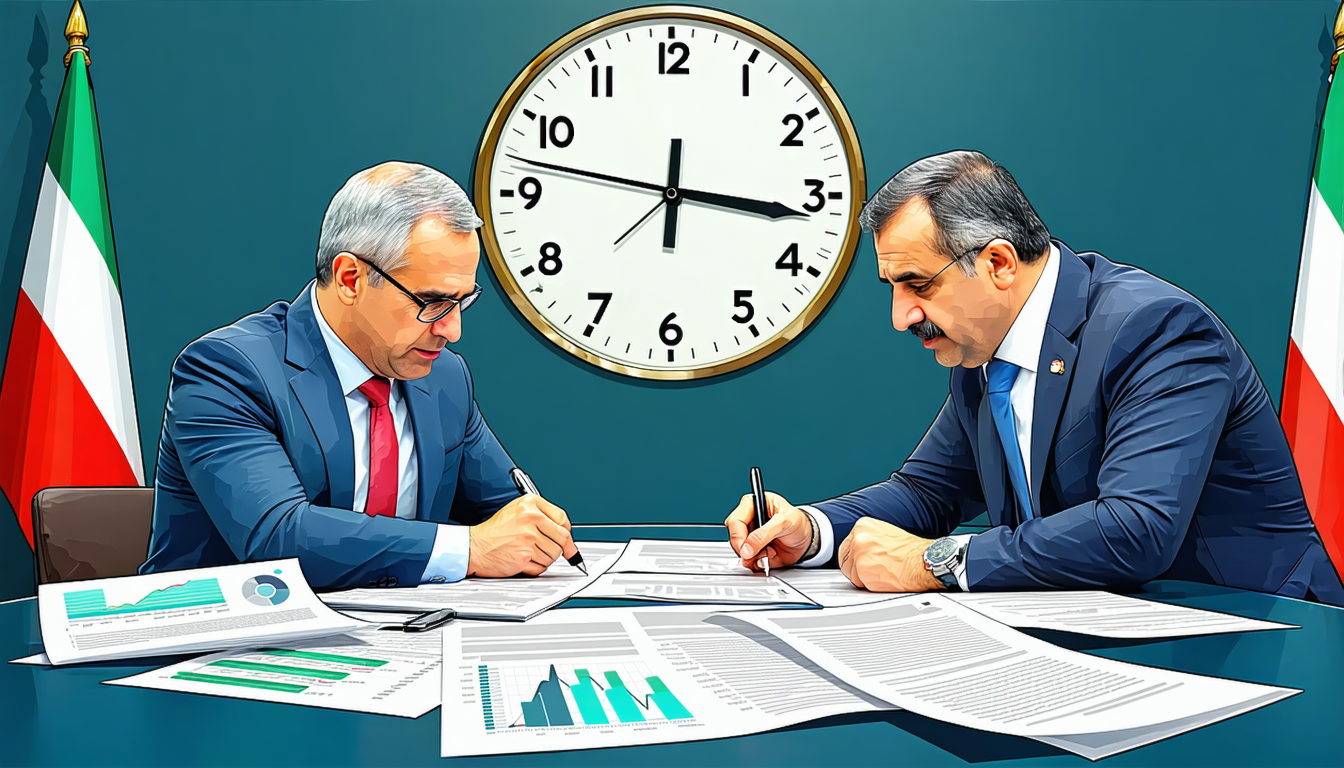
Lebanon has received additional time from the International Monetary Fund to advance its financial reform agenda, with new deadlines extending through the autumn meetings of major international financial bodies. According to financial officials, the extended timeline reflects geopolitical developments and aims to facilitate passage of comprehensive legislation on restoring financial order and enabling deposit recovery.
The timeline encompasses reforms to the banking system alongside reinforced measures against money laundering and informal economic activity. Authorities are focusing on improving fund source verification and tracking cash flows to combat illicit financial channels.
A significant turning point came when the IMF released an updated assessment characterizing Lebanon's banking sector crisis as "systemic" in nature. This classification aligns the Lebanese situation with comparable crises experienced in 13 nations worldwide over the past decade, spanning from Angola in 2015 through Vietnam in 2022. The designation is expected to facilitate alignment of Lebanese reform initiatives with international standards and successful recovery models from similar cases.
Financial officials anticipate this international designation will help resolve longstanding domestic disagreements that have hindered adoption of a unified recovery strategy. They argue that acknowledging the systemic character of the crisis provides the necessary foundation for restoring confidence in the financial sector and supporting economic recovery—particularly crucial given that successive conflicts have inflicted losses estimated at no less than $20 billion.
The IMF's characterization gains particular relevance as Parliament considers the government's draft law on financial restructuring and deposit recovery. Officials emphasize that recognizing the crisis as systemic demands reconsidering proposed approaches to ensure equitable distribution of responsibilities among all stakeholders, rather than concentrating consequences on depositors and banks alone.
This international assessment echoes conclusions reached by Lebanon's Shura Council more than two years prior, which determined that the nation faced a systemic rather than ordinary banking crisis. That judicial review assigned primary responsibility to the state for its long-standing practice of borrowing from the central bank to finance budget deficits.
During recent discussions between President Joseph Aoun and bank sector leadership, including Association of Banks Chairman Dr. Salim Sfeir, both sides acknowledged that banks stand ready to assume their share of losses within a framework that does not transform reform into sector liquidation or unfair burden-shifting. The President emphasized the necessity of "reaching a fair and comprehensive solution to the banking crisis that satisfies everyone and preserves rights alike," adding that "without a sound banking sector there will be no investments, and there will be no country."
Central Bank Governor Karim Saeed has expressed reservations about critical elements of the government proposal, particularly regarding state obligations. He stressed that "the state is the final body that used these funds over many years," and that its contribution "must be explicitly specified, measurable, legally binding, and coupled with a clear and reliable timetable."
The Governor has repeatedly highlighted the challenge of equitably distributing financial burdens among the state, central bank, and commercial banks. Additional priorities include reducing the fiscal deficit by eliminating irregular claims, establishing clearly defined deposit categories, and implementing staged repayment combining cash disbursements with asset-backed financial instruments within available liquidity constraints.
Banking sector representatives have insisted on meaningful participation in discussions determining their fate. Their memorandum to officials contends that the draft legislation, rather than achieving fair responsibility distribution, exempts the state—identified as primarily responsible for the gap—from any explicit loss contribution while simultaneously harming both the banking sector and depositors.
International precedent suggests that systemic crises, regardless of severity, can catalyze construction of more robust and contemporary financial systems when accompanied by political commitment and substantive reform. Officials view the current moment as an opportunity to establish a revised economic and financial model capable of restoring Lebanon's regional financial standing and rebuilding both domestic and international confidence.
Alongside these structural discussions, economists are debating immediate monetary policy responses. Dr. Patrick Mardini has cautioned against imposing capital controls on fresh dollar inflows, characterizing such measures as among the worst available options. He notes that the central bank's foreign currency reserves declined by approximately half a billion dollars between late January and April 2026, driven by rising import costs, general budget deficits, and depositor fund withdrawals under official circulars.
Mardini traces recent reserve dynamics to policy shifts beginning in summer 2023, when the central bank ceased lending to the state. This discipline prompted the government to generate budget surpluses, reversing the previous pattern of central bank fund withdrawals. Reserves consequently doubled from mid-2023 through January 2026, rising from roughly $7 billion to approximately $12 billion, enabling modest increases in depositor withdrawal ceilings.
The outbreak of conflict introduced new pressures. Rising oil prices have inflated import costs across the board, from fuel to foodstuffs dependent on petroleum-derived fertilizers and industrial inputs. Transport and maritime insurance expenses have similarly increased due to heightened shipping risks. Should hostilities persist through summer, state revenues will contract further while expenditures expand due to displacement assistance and debris removal operations.
Mardini dismisses alternative scenarios—including capital controls on fresh dollars, reduced depositor withdrawal ceilings, or currency collapse—as suboptimal given Lebanese consensus against repeating the 2019-2023 exchange rate deterioration experience. He advocates instead for establishing a currency board arrangement guaranteeing 100 percent reserve backing of the lira, whereby each 89,500 lira units correspond to one dollar in reserves.
Under this framework, commercial banks' fresh deposits held at the central bank would remain restricted from central bank disposal, available only for withdrawal by depositing institutions. Mardini contends that such a system would prevent lira collapse, curtail capital flight, reduce reserve pressure, and preserve foreign currency availability for implementing desired reforms. He urges accelerated examination of this approach given mounting reserve constraints.
Compare options


