Diplomatic Path Emerges as Alternative to Military Approach Against Hezbollah
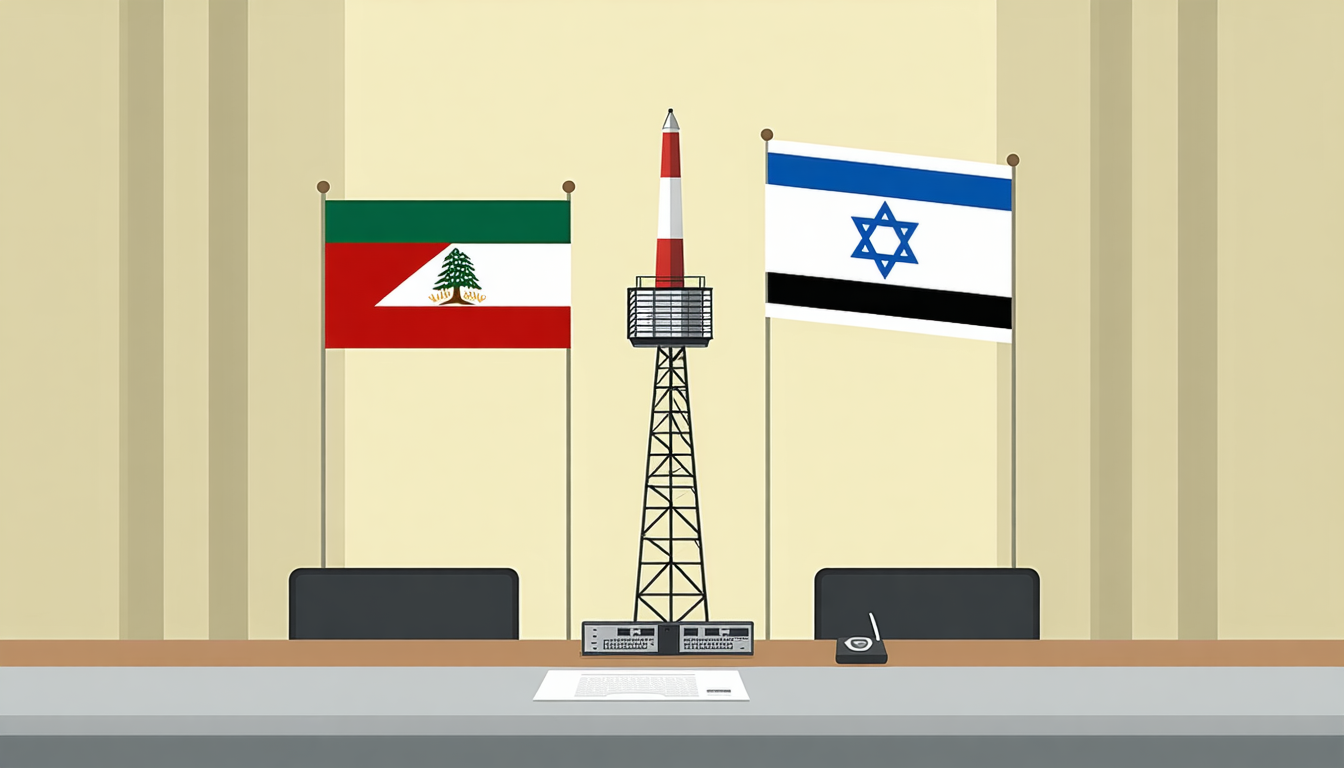
Negotiations between Lebanon and Israel, though precarious and multifaceted, may offer a window to pursue a fundamentally different strategy regarding Hezbollah, according to research published in the National Interest. Rather than relying solely on military operations, the analysis suggests a combined political and security framework could prove more effective than decades of armed conflict.
Researcher Bilal Saab's report underscores a central problem: Israel and Lebanon approach the Hezbollah question through entirely different lenses, complicating any bilateral agreement yet simultaneously revealing potential common ground.
Lebanon's government views Hezbollah as a comprehensive internal threat extending far beyond weaponry. The organization's ties to Iran, coupled with its extensive security apparatus, intelligence networks, financial operations, and political influence, constitute a multifaceted challenge to state authority. Beirut characterizes the group as an armed militia engaged in political violence, running illicit financial networks that corrode both governmental legitimacy and the formal economy.
Israel's perspective differs markedly. The Jewish state concentrates exclusively on the security dimension—primarily preventing missile and drone attacks across its borders. This narrow focus has historically driven Tel Aviv toward military solutions, from the occupation of southern Lebanon and the creation of a security zone through wars in 1993, 1996, and 2006, to contemporary operations in the south.
Yet this military-centric approach has consistently fallen short of its objectives. Despite decades of military pressure, Hezbollah has not been eliminated or removed from the scene. Paradoxically, each armed confrontation has often strengthened the organization rather than weakening it. Israel's current strategy of establishing a buffer zone and implementing widespread destruction of border communities—reminiscent of tactics employed in Gaza—has rendered civilian return nearly impossible. Nevertheless, Hezbollah maintains operational capacity and has continued inflicting casualties on Israeli forces within Lebanese territory, much as it did during the 1985-2000 occupation period.
Recent Lebanese governmental initiatives suggest movement toward a political strategy. President Joseph Aoun and Prime Minister Nawaf Salam have pursued multiple fronts against Hezbollah's influence over recent months. These include public declarations affirming state monopoly over weapons, security protocols at Beirut's airport and port, and judicial and financial measures targeting party-linked institutions. Central Bank Governor Karim Saied has instructed Lebanese banks and brokerage firms to cease dealings with Al-Qard Al-Hassan, Hezbollah's primary financial institution.
Military operations have accompanied these civilian-sector efforts. Since September, the Lebanese army has conducted removal operations targeting tunnels, missile sites, and military installations south of the Litani River, with government plans targeting complete regional disarmament by year-end 2025. The far greater challenge lies north of the Litani, where Hezbollah categorically refuses consideration of military arsenal dismantling.
Progress on this trajectory, however, remains contingent on halting Israeli military attrition. Sustained bombing campaigns, infrastructure destruction, and population displacement complicate the Lebanese state's capacity to confront Hezbollah independently.
The analysis proposes that meaningful resolution requires reciprocal, graduated measures: Israeli withdrawal from buffer zone positions, cessation of civilian area targeting, and release of Lebanese detainees, balanced against strengthened Lebanese state authority and army deployment in sensitive zones including southern Beirut suburbs and areas north of the Litani.
The report reflects a shifting recognition among Western policy centers that military force alone cannot resolve the Hezbollah question. Instead, addressing the organization necessarily involves working through Lebanese state institutions rather than circumventing or dismantling them.
Compare options


