Lebanon Weighs Formation of Special Military Unit for Hezbollah Disarmament as Israel Talks Advance
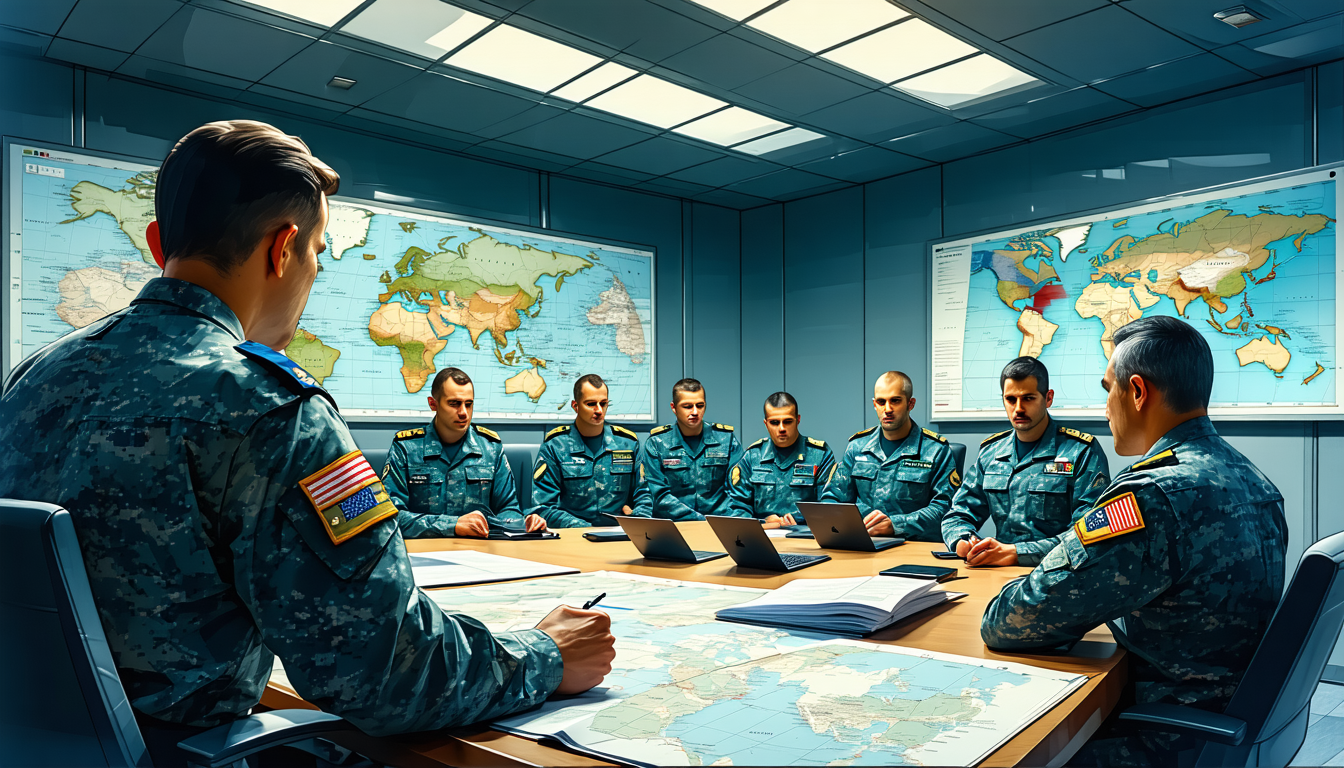
Lebanon stands at a critical juncture as negotiations with Israel move forward, with a scheduled Pentagon meeting on the 29th of this month set to establish a joint security framework. The discussions have brought into focus a contentious proposal: the establishment of a dedicated military unit within the Lebanese Army tasked with disarming Hezbollah.
Under examination is a plan to create a specialized formation operating under American supervision, with Lebanese personnel staffing its ranks. According to retired Brigadier General Marcel Baloukji, this unit would function through operational channels rather than traditional army command structures, enabling the military to execute UN Security Council Resolution 1701 through specialized committees insulated from political interference.
Baloukji contends that such an arrangement would represent a pragmatic initial phase, allowing the army to operate independently of political pressures while remaining under American military oversight—distinct from French or UNIFIL supervision. He suggested that international or Arab forces, potentially including Jordanian, Egyptian, and Saudi contingents, might later participate in the process.
The retired general acknowledged that while the Lebanese Army possesses the capability and qualifications necessary for such operations, the fundamental obstacle remains the lack of political will to implement existing directives. He pointed to ongoing training exercises at Hamat military base, where American and British instructors work with Lebanese military personnel including commando units, as evidence of existing infrastructure for such operations.
However, implementing such a specialized unit carries substantial risks. The prospect of direct confrontation with Hezbollah raises concerns about potential internal destabilization and civil strife. Historical precedent weighs heavily on these deliberations—specifically, the dissolution of the Fourth Brigade.
The Fourth Infantry Brigade was officially disbanded in March 1984, following its military collapse and fragmentation during September 1983 combat operations in the Western Shuf region, amid the country's severe sectarian and political turmoil. The fracturing of the 43rd Battalion, commanded by Captain Walid Sukariya—who later served as a deputy in the Loyalty to the Resistance bloc—proved pivotal in altering the battle's trajectory and reshaping political dynamics, including the subsequent February 6 uprising that overturned the May 17 agreement.
When asked whether historical patterns might repeat, Baloukji dismissed the parallel. He characterized the Fourth Brigade as embodying sectarian divisions and representing a troubling chapter in the army's history, explaining why it was never reconstituted. The current situation differs fundamentally, he argued, given that Hezbollah lacks the capacity to fracture the military in the manner that Palestinian and National Movement forces did during the civil war. He noted that substantial Shiite constituencies, particularly within the Amal Movement, maintain support for the army, reducing the risk of institutional division.
Israel has effectively compartmentalized the political and security dimensions of negotiations, separating peace discussions from military confrontation with Hezbollah, and linking disarmament to broader negotiations on other outstanding issues. The critical question remains whether Lebanon can navigate this framework successfully and what consequences will emerge as implementation proceeds.
Compare options


