The Hidden Differences Behind USB-C Cable Performance
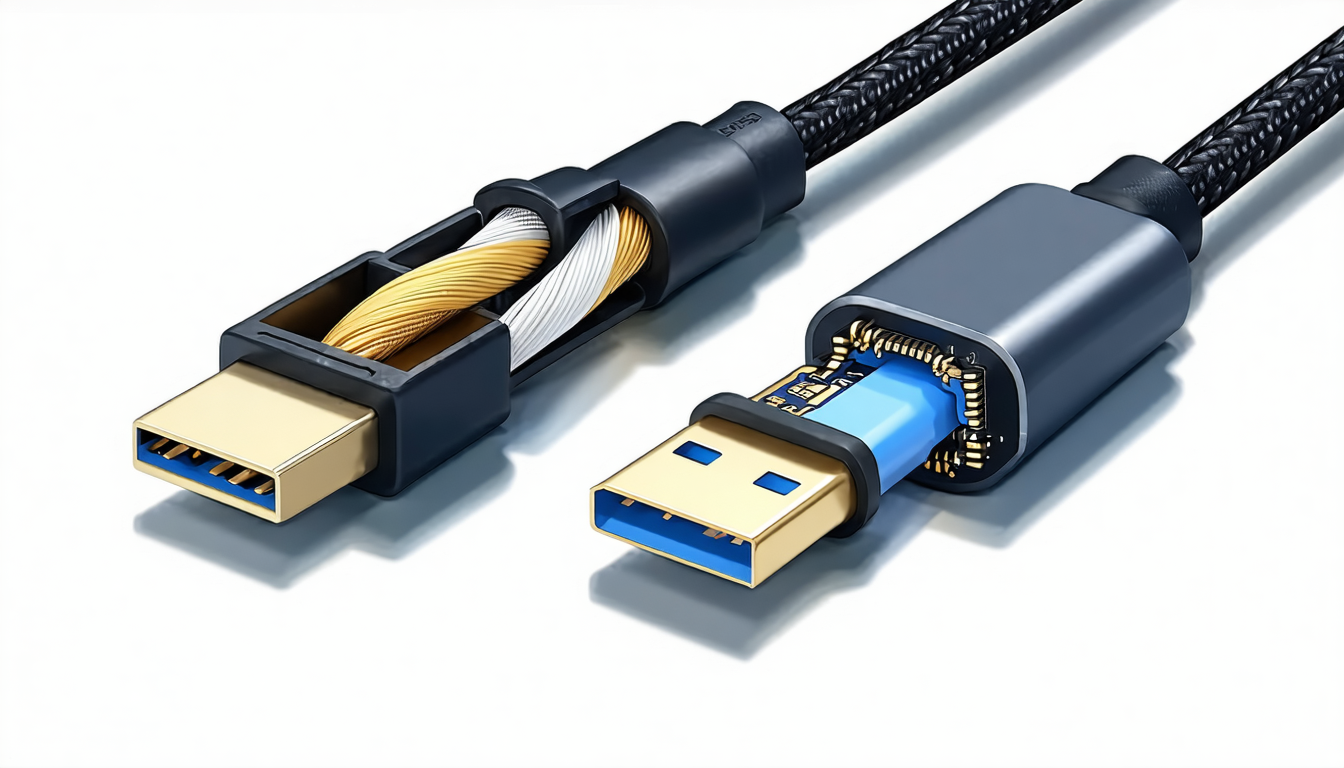
The proliferation of USB-C ports across smartphones, laptops, and tablets has led to widespread misunderstanding about what this connector actually represents. Industry analysts clarify that USB-C is merely a physical port design, not a standardized speed specification.
The performance gap is substantial. Some cables deliver only 480 megabits per second, while premium options reach speeds up to 40 gigabits per second through technologies like USB4 and Thunderbolt. This disparity stems from internal construction differences—specifically the wire count, insulation quality, and embedded electronic components within each cable.
This reality creates a practical problem for consumers: a budget-priced cable may look identical to an expensive counterpart but deliver significantly worse performance in both file transfers and device charging, despite matching physical appearance.
Cable capabilities vary considerably across the market. Basic models support only charging or USB 2.0 speeds, while advanced versions enable USB 3.1, USB 3.2, and USB4 protocols. Fast charging support ranges from 100 watts in standard cables to 240 watts in newer designs.
The confusing technical nomenclature compounds the issue. Designations such as USB 3.2 Gen 1, Gen 2, and USB4 have made the landscape increasingly difficult for ordinary users to navigate. Even devices equipped with USB-C ports may not deliver uniform performance, since results depend on the combination of port type, cable quality, and charger specifications.
Many users have experienced disappointment with sluggish data transfers or slow charging only to discover the root cause was an incompatible cable—a surprise to those assuming all USB-C cables operate identically.
Tech professionals recommend examining cable specifications before purchase, paying particular attention to data transfer rates and charging capacity ratings. Sourcing cables from established manufacturers and seeking USB4 or Thunderbolt certification ensures optimal performance when maximum speeds matter.
As major technology companies converge on USB-C as a universal device standard, industry observers anticipate that improved naming conventions and compatibility guidelines will eventually clarify the current confusion surrounding cable selection.
Compare options


