Growing Discontent Among Lebanese Shiites Over Iran's Role in Conflict
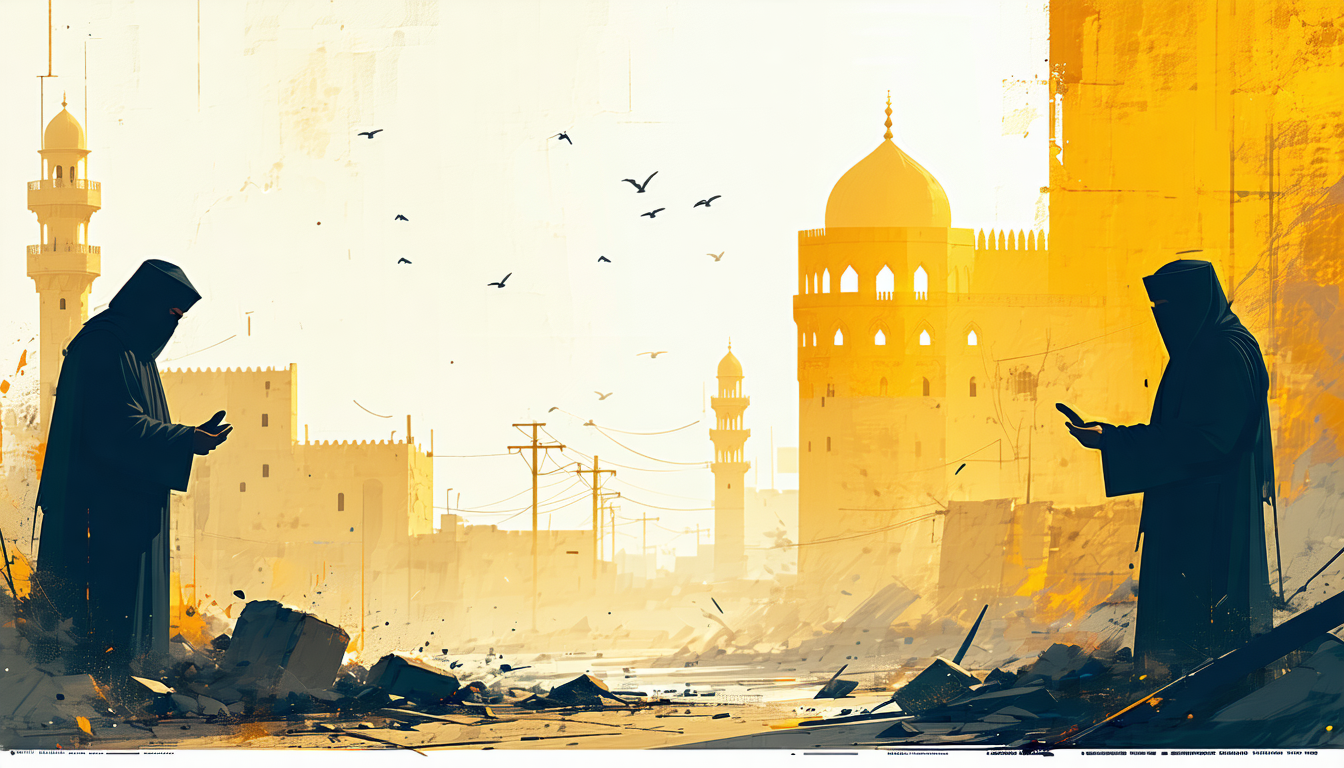
Lebanon's Shiite population is experiencing mounting frustration that extends beyond conventional political divisions between Hezbollah and the Amal Movement. The underlying source of this discontent centers on Iran, as residents grapple with villages reduced to rubble, families scattered by displacement, and lost loved ones—all while feeling abandoned to navigate war, homelessness, poverty, and devastation alone.
Signs of this unrest have become increasingly visible on social media platforms, particularly among followers of the Amal Movement, led by Parliament Speaker Nabih Berri, and supporters of Hezbollah. The traditional ideological messaging that once unified these communities has proven insufficient to contain the mounting anger and hopelessness.
This sentiment persists even as Hezbollah leadership continues to express gratitude toward Iran and underscore its support for the "resistance," while also depending on Tehran's influence to broker an end to hostilities. However, a significant portion of the Shiite community now perceives a stark disconnect between this rhetoric and their lived experience. Tens of thousands remain displaced in deplorable conditions with no clear path toward homecoming or rebuilding.
Ideological Discourse Meets Ground Reality
The controversy surrounding statements by Sheikh Assad Kassir, a Hezbollah-affiliated cleric, illustrates this growing divide. Kassir asserted that "preserving the (Islamic Republic) in Iran is a religious duty that takes precedence over preserving individuals; Because it constitutes a guarantee for the preservation of Islam itself." His argument drew on interpretations of late leader Khomeini's teachings and the concept of sacrifice embodied in the Karbala narrative.
However, this message faced considerable pushback from residents who now evaluate the conflict through the lens of its human and material toll.
Zainab, a woman displaced from the south, articulated this perspective: "The war was opened under the pretext of supporting Iran, but today we feel that we have been left alone." She noted that even representatives from Hezbollah and the Amal Movement have shown little concern for those in displacement centers. She added: "I feel that dying under the roof of our house is easier than the life of displacement that we live today. We can no longer bear this psychological and living fatigue, and no one feels what we are going through."
Mona, a mother of two renting accommodation in Mount Lebanon, observed that recent events have shifted perspectives within the resistance-supporting community: "The war began under big slogans, but the result was the destruction of our villages, the loss of our youth, and the displacement of our families. Today, people feel oppressed by the South more than anything else."
She continued: "Many have come to the conviction that the South and its people are more important than all regional conflicts. The people of the south are saying: Let Iran and the whole world burn and the south will remain."
The "One Axis" Framework Fractures
Umm Muhammad expressed deep disillusionment with the "one axis" concept that has long structured regional alignments: "Over the past years, they have been telling us that we are one axis, and that we must support any battle this axis is waging. But when the war came upon us, we felt that we were alone."
She highlighted a particular contradiction: "Tehran was saying that it would not enter into any negotiations before the ceasefire in Lebanon, and then it said that it had reached a ceasefire agreement as a result of negotiations with America, while the Israeli bombing and occupation expanded every day."
Calls for Independent State Action
Like many Lebanese, Laila advocates for the state to lead direct negotiations with Israel and pursue an independent path to ending the conflict. She stated: "Iran works in its interest, and this is its right, but why don't we also think about the interest of our people and our country? We are tired of waiting and of linking the fate of the South to the accounts of other countries."
She emphasized that "many are now demanding that the Lebanese state alone undertake the management of the war file and negotiations. Because the continuation of the current situation means more destruction and losses without any clear horizon."
Analyst Perspective on Shifting Attitudes
Political analyst Ali Al-Amin describes "the clear change that the Shiite environment is witnessing in its view of Iran, and the escalation of feelings of anger and disappointment within the (Hezbollah) public as a result of what is happening in southern Lebanon."
According to Al-Amin, Iran's influence historically extended beyond sectarian or political dimensions to encompass "a network of support and services that the party provided with Iranian support, which for years constituted a source of safety for many families." This foundation has begun eroding as communities witness the destruction of southern settlements, the displacement of populations, and mounting casualties—while observing what many perceive as inadequate Iranian assistance relative to the scale of losses.
Al-Amin notes that substantial portions of Hezbollah's constituency have begun questioning why Iran has not launched a direct military response or applied genuine pressure on Israel, despite repeated assertions about "the unity of the battlefields" and Iran's missile arsenal.
Unprecedented Questioning
Al-Amin elaborates: "This reality has created a feeling among some that Iran is using Hezbollah and the Shiite environment within its regional calculations, without being prepared to pay an actual cost to protect Lebanon, or limit the continuation of war and destruction."
He observes that "this disappointment opened the door to unprecedented criticism within the Shiite environment towards the Iranian role, and the policies that some consider to be linked to the interests of the Iranian regime more than to the interests of the Lebanese in the south."
Al-Amin points out an apparent inconsistency in Tehran's position: "Iran was saying that the ceasefire in Lebanon came as a result of Iran's agreement with America in Islamabad, and therefore, as long as Israel violated the ceasefire, Iran was supposed to violate the ceasefire and work to pressure Israel to at least stop its aggression and expansion, and limit the displacement of residents from dozens of southern villages."
The emerging narrative suggests that years of alignment with Iranian-led regional strategies may be giving way to a more localized focus on Lebanese sovereignty and the immediate welfare of affected communities.
Compare options


