Israeli Military Operations Intensify as Lebanon-Israel Negotiations Advance in Washington
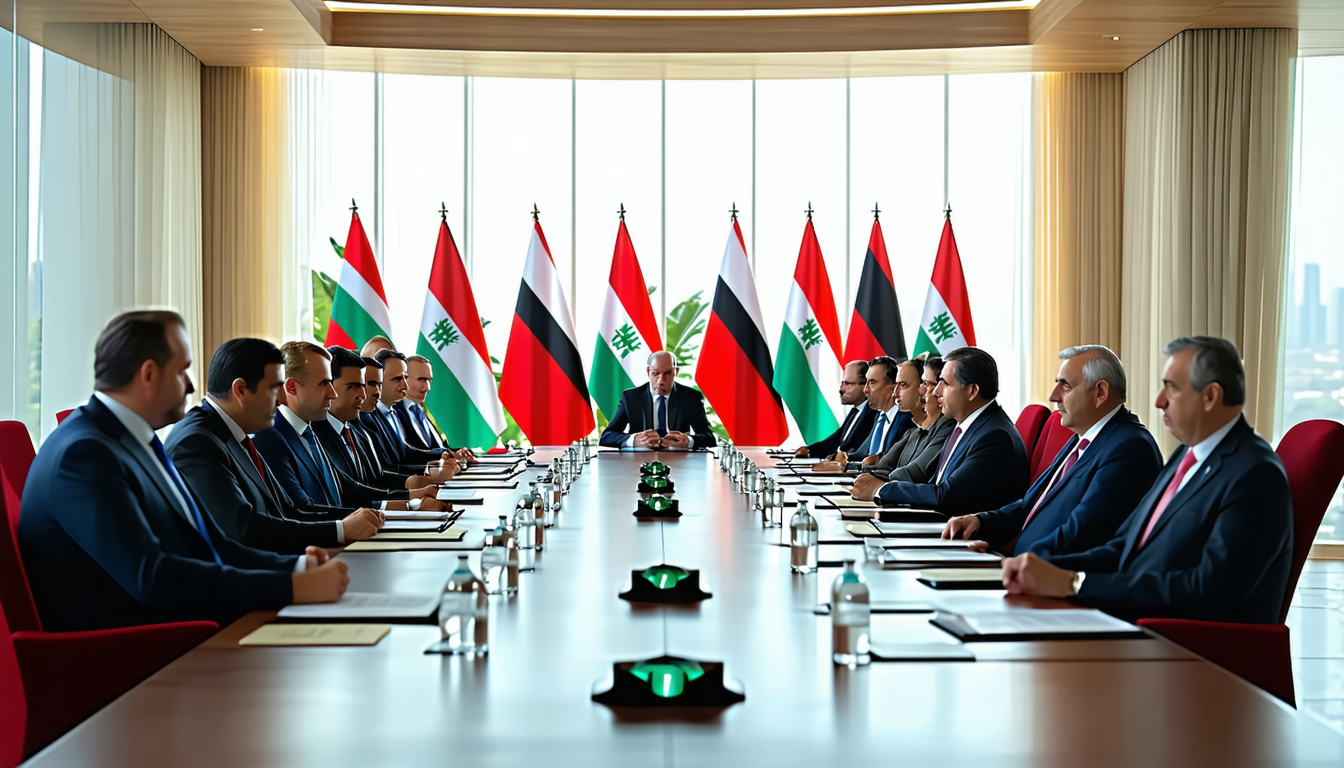
The diplomatic process between Lebanon and Israel, unfolding under American mediation in Washington, is occurring simultaneously with a substantial military buildup in southern Lebanon. Israeli and Hezbollah forces continue exchanging hostile signals, with Israel's military pursuing what it describes as necessary operations even as ceasefire demands from Lebanon remain central to the negotiation agenda.
Political analyst Ali Hamadeh has characterized the current Israeli military campaign as "extremely dangerous," warning that the operations could produce consequences of significant strategic importance regarding Israeli military presence and territorial control south of the Litani River.
According to Hamadeh, Israeli forces have concentrated their firepower on Ali Al-Taher Hill, which overlooks Nabatieh. The analyst identified the location as hosting "deep tunnels, weapons and missile storage facilities, and launch platforms," describing it as an underground military installation that has endured Israeli bombardment for approximately four years.
Recent military movements near Beaufort Castle have drawn particular attention. Hamadeh cited reports suggesting Israeli forces may be attempting landings in the vicinity of the historic fortress. Should Israeli forces secure control of Beaufort Castle, Hamadeh noted, they would gain commanding artillery positions and direct observation capability over Nabatieh itself.
The concentration of Israeli military effort on Nabatieh reflects a broader strategic focus, Hamadeh suggested. This emphasis is underscored by Israeli forces crossing north of the Litani River and establishing positions in Zawtar al-Sharqiya, approximately 8 kilometers from Nabatieh's center.
Hamadeh predicted that any confrontation near Beaufort Castle would prove "difficult and complicated," noting that Hezbollah has already undertaken defensive preparations and tactical calculations. The symbolic weight of Nabatieh has intensified following the loss of Bint Jbeil and Khiam to Israeli forces.
On the diplomatic front, Hamadeh expressed skepticism about substantive progress, stating that "nothing serious was proposed that could be built upon." He found the circulation of media reports puzzling, given that negotiating sessions remained active and neither delegation had issued public statements.
The first phase of talks has maintained a general political character, establishing groundwork for a subsequent military-technical phase involving officers from both Lebanese and Israeli armed forces.
Between negotiating sessions, the Lebanese President has maintained direct contact with his country's delegation, resulting in one approximately thirty-minute delay in resuming talks. Joint working lunches have been incorporated into the schedule, serving both as formal sessions and as informal opportunities to reduce tensions between the delegations. Similar lunch sessions are expected to continue in subsequent days.
Hamadeh cautioned that meaningful evaluation of the negotiations must await completion of the second phase. He suggested that more optimistic outcomes could yield a political framework agreement alongside a declaration of intent establishing parameters for a broader security and political accord.
Compare options


